Jul 30, 2019
Sitting is the new smoking? Ergonomics at work and in daily life
“Sitting is the new smoking”
“Sitting is the new smoking”
Commonly, it is said that overweight and back pain are the tolls we pay for a sedentary lifestyle. Commuting by car, working eight hours at a desk, adding a few more at home, relaxing in front of the TV screen - this is the standard daily life for most working people.
The number of experts highlighting the harmful effects of prolonged sitting is constantly growing and their arguments are supported by numerous scientific studies.
The author of the popular Western slogan “sitting is the new smoking,” Dr. James Levine, director of Arizona State University, boldly states that “sitting kills more people than HIV and is riskier than skydiving.” WHO ranks a sedentary lifestyle as the fourth most avoidable cause of death.
Too frequent, prolonged sitting harms the heart, negatively affects posture, and most severely, leads to pain and spinal disorders.
It must be acknowledged that current work standards sometimes leave no other choice – one must sit. However, it is possible to learn to sit healthily and optimally for the body – this is a skill that requires continuous development.
Office Workers - High-Risk Group
According to a report developed by The National Occupational Research Agenda NORA, over 50% of women and nearly 45% of working men experience musculoskeletal disorders [NORA 2001].
Maintaining a sitting position seems not to require much effort. However, the truth is different! Prolonged sitting leads to certain muscle groups weakening and extending, while others contract and become overly tense. The result is deviations from proper body posture, leading to frequent pain and a greater susceptibility to injuries. [Kutzner, Kozińska M., 2001].
One must realize that the quality of movement and assuming certain positions decisively affects the perceived quality of life. The work ergonomics we practice for most of the workday have a significant impact on how we move for the rest of that day.
Investment in Employee Health Awareness
Theoretically, human joints should function properly for over 100 years – so why are more people in their 30s experiencing serious spinal problems?
Musculoskeletal disorders are one of the most common causes of temporary work incapacity and rehabilitation benefits. Chronic locomotor and nervous system diseases have been included in the list of occupational diseases [Regulation of the Council of Ministers of June 30, 2009, on occupational diseases (Dz. U. nr 105 poz. 869)].
Musculoskeletal disorders significantly impact the quality of work performance. Limitations caused by chronic pain can affect cognitive abilities, concentration, rational thinking, motor skills, and most importantly, work efficiency. People suffering from any pain have a significantly lower quality of life.
Tomasz Świderski, director of Feel it, physiotherapist, and work ergonomics specialist, points out that the pain discomfort of an employee can be a threat to the employer. “The problem is that first – we are not always aware of how certain habits affect our health and well-being... It is said that a company's most valuable asset is its people. But what asset can we talk about if the employees are in poor physical condition, frequently sick (thus taking sick leaves), complaining of pain, operating under severe stress, and feeling unwell? Wouldn’t a company benefit more if its team were vital, healthy, and well-motivated to achieve further success?”
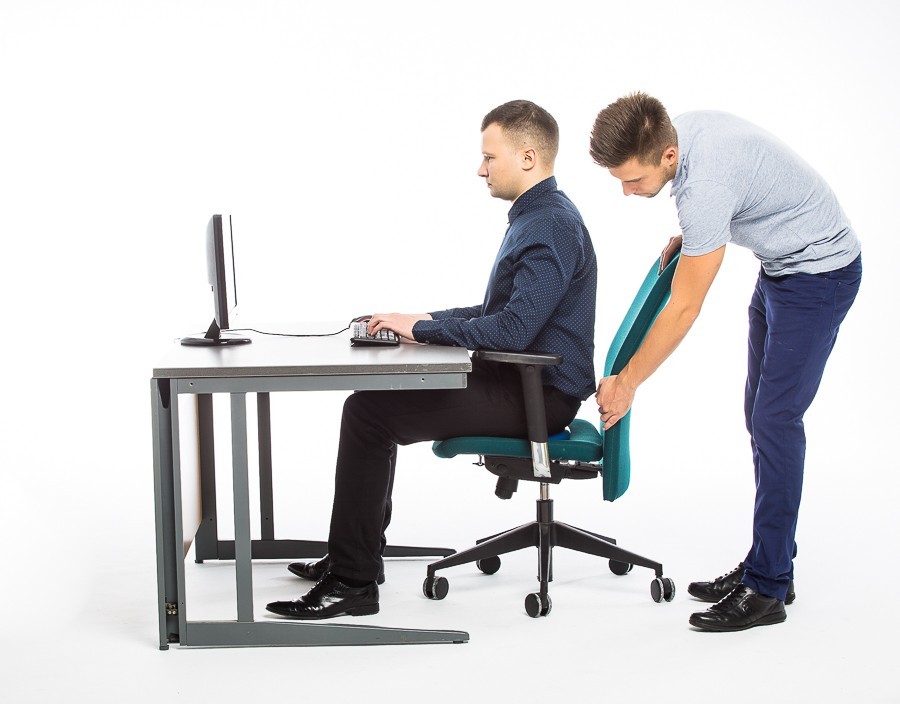
Working on a computer forces one to adopt a certain body posture. An improperly set workstation and the posture assumed at the desk significantly contribute to the emergence and/or exacerbation of many ailments. These ailments are related, among other things, to increased muscle tension, blood flow disorders, tissue tenderness due to prolonged pressure, and neurological disorders. Usually, office workers do not have the knowledge to apply correct work ergonomics principles. Workplaces typically lack staff with the competence to implement such principles and make employees aware of preventing certain disorders and pain conditions.
So who can meet the health needs of the specific group of office workers forced to sit? Who has sufficient knowledge to teach optimal sitting mechanics?
Physiotherapist Tomasz Świderski reveals a proven strategy with which Feel it works on body and posture awareness among office workers. “Most large companies employ people responsible for health and safety. Our activities support such departments by complementing their training with knowledge possessed by physiotherapists, namely a unique understanding of body structure and the environmental impact of the office on the body. Our Ergonomic Audits provide employees with a complete package of knowledge necessary for independent, ergonomic work. The knowledge is conveyed practically, making a strong impact on employee awareness. Employers, in turn, receive information about employee health states, their needs, disease risk levels in the form of a comprehensive ergonomic report.”
Ergonomic Work and Employee Efficiency
Let's ask ourselves, what affects our work efficiency? Apart from financial, professional, and personal motivation factors, our body's performance remains. Each of us has a certain level of endurance to the sedentary work impact on our bodies. Commonly referred to as “fatigue,” it is nothing more than reaching the threshold where our body signals that it needs rest. Factors affecting this fatigue time include the amount and quality of sleep, pain levels, and workplace quality - comfort. Ergonomic work should be considered as a set of factors that prolong the state in which our body reaches fatigue, significantly impacting work efficiency degradation. Preventive actions like ergonomic audits, and introducing massages to the office seem to be some of the most sensible solutions affecting work efficiency. Work ergonomics will reduce the factor causing pain or occupational diseases (cause) and meetings with a physiotherapist or masseur in the office will improve the current physical condition of tired employees. To confirm these words, the significant demand increase for such services on the Polish market can be cited. “Our experience in implementing health programs is confirmed by many years of cooperation with companies, supported by numerous references” - says Anna Cieślańska from Feel it.
Gradual Introduction of Healthy Habits
Work ergonomics and ergonomic audits are ideal starting points for creating comprehensive health programs that meet the needs of employees, and consequently, the companies employing them.
Besides a sedentary lifestyle, leading factors responsible for 21st-century diseases include inadequate diet and stress, usually related to professional life. Work, which consumes much of the average person’s life, involves not only sitting still but also irregular snacking on fast and unhealthy foods, challenging tasks, demanding bosses, or the atmosphere among colleagues.
Consequently, employees neglecting their psychophysical condition gradually lose not just their cheerfulness but also engagement and motivation, often resulting in decreased productivity, rising sick leave, and strained team relationships.
Employers using Corporate Wellness services from Feel it see the clear link between employee health and perceived quality of life and the company’s performance!
How health programs organized for employees impact their perception of the workplace and employer is widely known - positively. Of course, it depends on the type and organization of such activities, which can be prepared in multiple directions. For example, if a company struggles with employee overweight issues - a well-prepared health program should start with understanding the cause, e.g., access to vending machines with sweets, lack of dietary awareness, poor infrastructure for commuting by bicycle. Based on these findings, a concept should be developed to reduce obesity among staff by implementing appropriate actions. In this case, respectively: replacing vending machines with access to fruits and vegetables, organizing dietary workshops, consultations with dieticians, and installing bicycle racks.
Employee Awareness Translates to Health!
Quality of life is understood as an individual’s feeling concerning their psychological, physical state, and social situation. Any discomfort caused by, among other factors: illness, degree of pain intensity, dissatisfaction with one’s appearance or fitness, results in a change in the perceived quality of that individual’s life [HRQOL, health-related quality of life]. A healthy diet, physical activity, knowledge of ergonomics, and skillful planning and integration into daily obligations lead to greater satisfaction with one’s “self.”
Conscientious employers, aware of the great responsibility they bear for their employees' well-being, are invaluable.
“By organizing health programs, health days, sports days etc., we approach the well-being of employees holistically. We offer actions in areas: physical activity, health psychology, proper nutrition, biological renewal, and work ergonomics -– the whole comes down to broadly understood (as defined by me) daily life ergonomics, that is, habits building a healthy lifestyle.” – explains Małgorzata Świderska, nutrition specialist, personal trainer at Feel it.
Seemingly simple, easily accessible work-life balance principles can often be challenging to implement in practice. The Feel it team specialists (composed of Physiotherapists, Trainers, Dieticians, and Psychologists) approach each employee individually. They offer guidance tailored to specific cases and indicate the right path to finding their life rhythm (work-life rhythm). We encourage you to familiarize yourself with Feel it’s offer and benefit from its 6 years of experience on the Polish market.
Learn more
Odkryj więcej z najnowszych postów.