Published: Mar 4, 2025
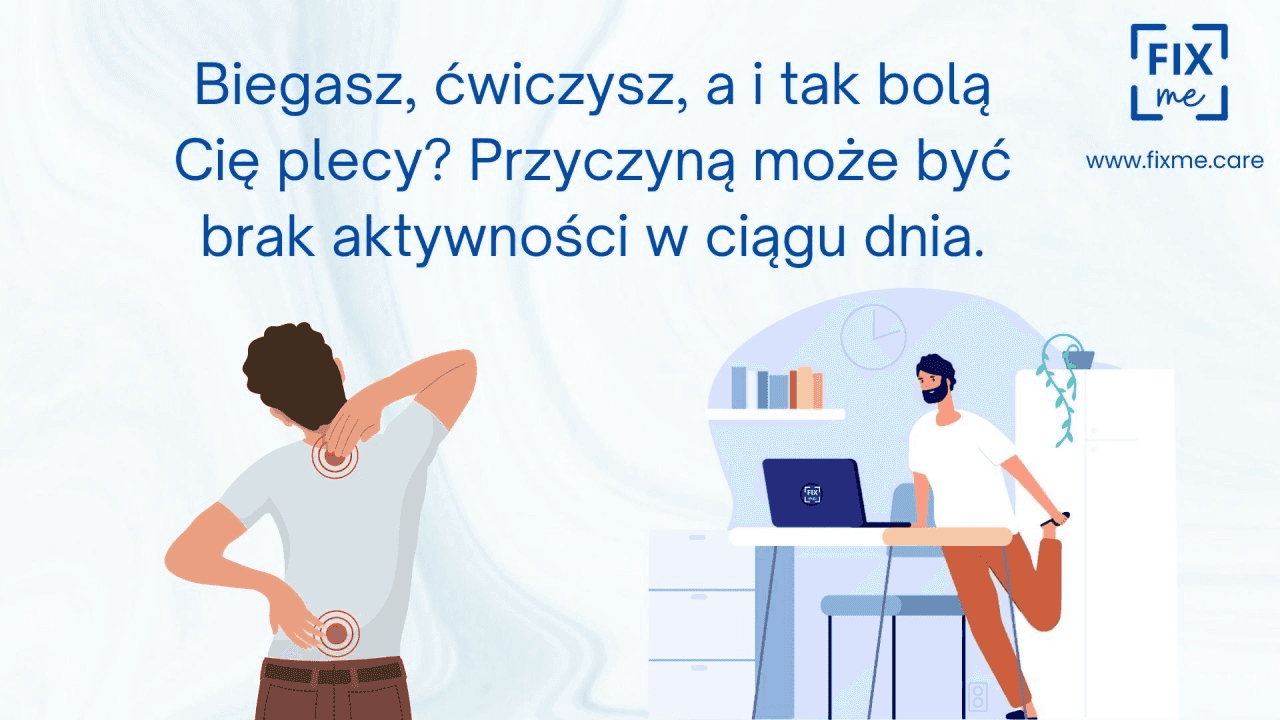
You run, you workout, and yet your back still hurts? The cause might be a lack of activity
FIXme · 7 min read
Overloads in office work – why movement during the day is key?
Overloads in office work – why movement during the day is key?
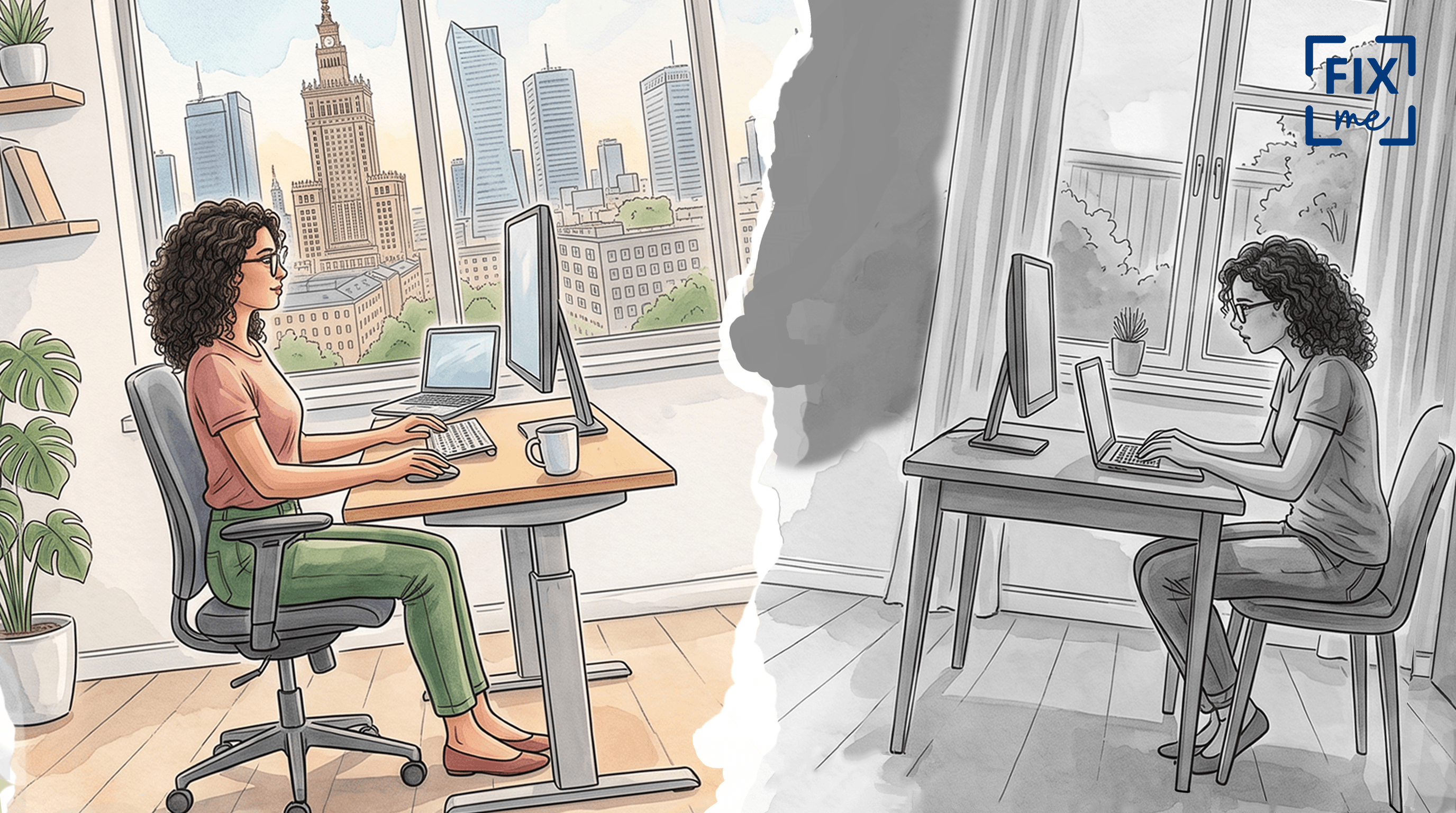
At first glance, office work seems safe for our health. We do not lift heavy weights, we do not perform intense, repetitive movements, and yet – paradoxically – more and more people working at a desk complain of chronic pain in the spine, shoulders, wrists, or head. Why is this happening and what does the lack of movement during the day have to do with it?
Inactivity as an underestimated threat
The human body was designed for movement. Our ancestors spent their days in various physical activities – hunting, gathering, building shelters. Modern lifestyles, especially office work, stand in fundamental contradiction to these evolutionary conditions. Prolonged sitting in one position forces static work on muscles and joints. This means that certain muscle groups are constantly tense, while others remain inactive. Over time, this leads to a muscle imbalance – some muscles become excessively tense and shortened, while others become weakened and stretched.
Postural adaptations – silent consequences of inactivity
What is initially just temporary muscle tension transforms, after months and years of sitting in front of a computer, into permanent changes in body posture, known as postural adaptations. The most common ones include:
- Forward head and neck posture – leading to strain on the cervical spine and frequent headaches
- Rounded back and rounded shoulders – resulting in limited shoulder girdle mobility and upper back pain
- Constricted chest – hindering proper breathing and affecting the functioning of the circulatory system
- Anterior pelvic tilt – increasing lumbar lordosis and exposing the lower back to strain
- Weakened abdominal and gluteal muscles – unable to properly support body posture What is particularly concerning, these changes can occur even in people who regularly play sports. Two hours of intense workouts a few times a week cannot undo the effects of 40+ hours spent in a sitting position.
Why an after-work workout is not enough?
Many people working in an office believe that regular physical activity after work is enough to offset the negative effects of a sedentary lifestyle. Unfortunately, recent research shows that this thinking is flawed. Here is why:
- The effect of micro-damage accumulation – maintaining an improper position for long periods causes minor tissue damage that accumulates throughout the day.
- Increased muscle tension – muscles kept in constant tension for many hours undergo chronic contractions that are difficult to relax even with intense workouts.
- Brain adaptation to movement patterns – the nervous system gets used to specific positions and movement patterns. The longer the inactivity lasts, the harder it is to "reprogram" these patterns.
- Circulatory and lymphatic disorders – prolonged sitting restricts blood and lymph flow, making it difficult to deliver nutrients to tissues and remove metabolic waste products.
Movement during the day – the simplest and most effective solution
Research shows that even a small amount of movement, if practiced regularly throughout the workday, can significantly reduce the risk of strain and postural adaptations. Frequency, not intensity, of activity is key.
Movement microbreaks – a scientific perspective
Professor Alan Hedge of Cornell University recommends using the 20-8-2 rule: after every 20 minutes of sitting, stand for 8 minutes and move for 2 minutes. Research showed that people who used this method experienced 54% less pain associated with office work. Meanwhile, Dr. James Levine from Mayo Clinic introduced the concept of NEAT (Non-Exercise Activity Thermogenesis) – physical activity that is not a workout, which is crucial for health. According to his research, people who move more throughout the day (even if they are just small movements) have better health parameters regardless of whether they play sports.
Technology supporting activity – the FIXme app as an innovative solution
In the era of digitalization, technology can become our ally in the fight against inactivity. An excellent example is the innovative FIXme app, which was designed specifically for people working in offices. FIXme is a comprehensive tool supporting physical activity during work, addressing all challenges associated with a sedentary lifestyle.
Key features of the FIXme app
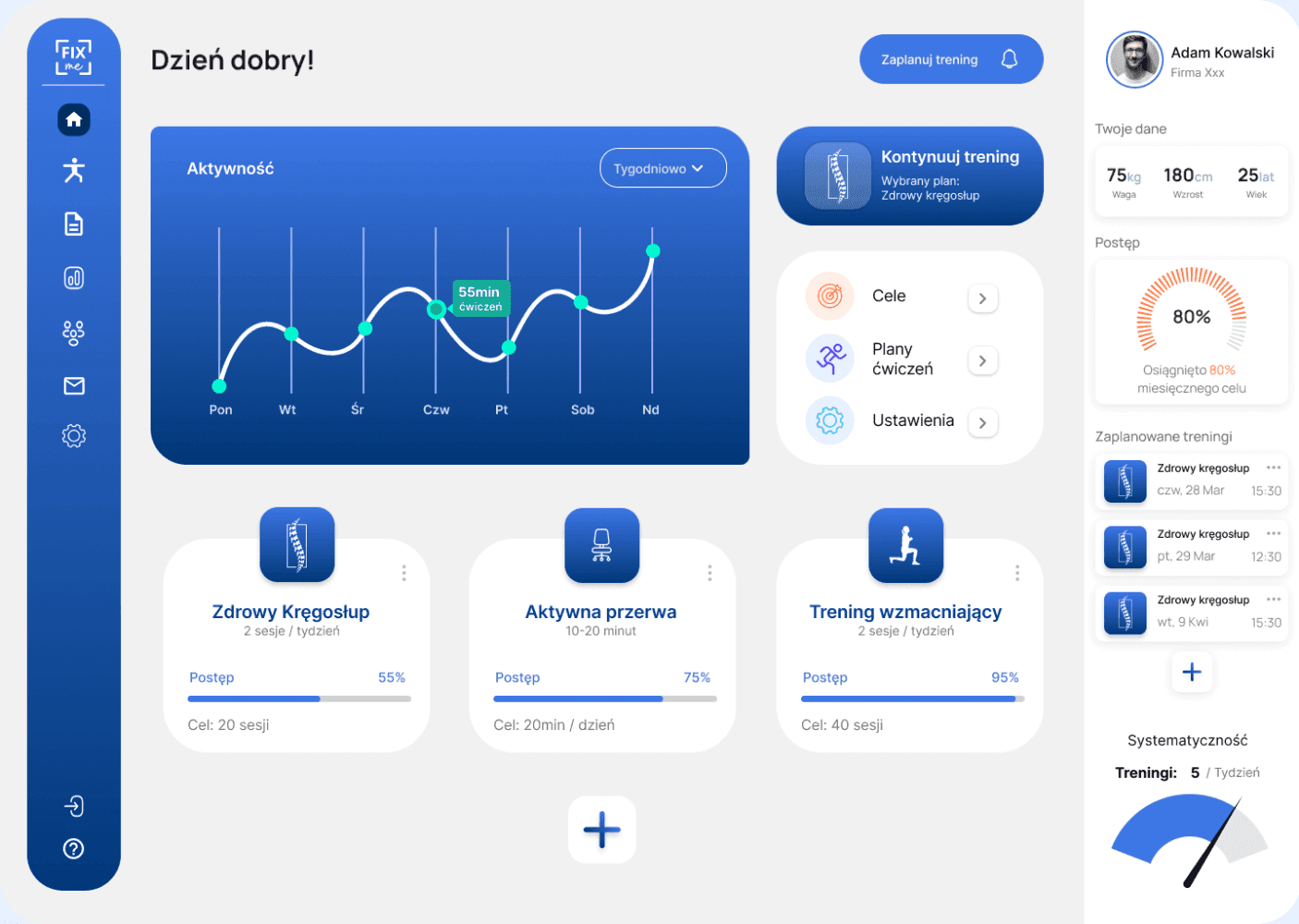
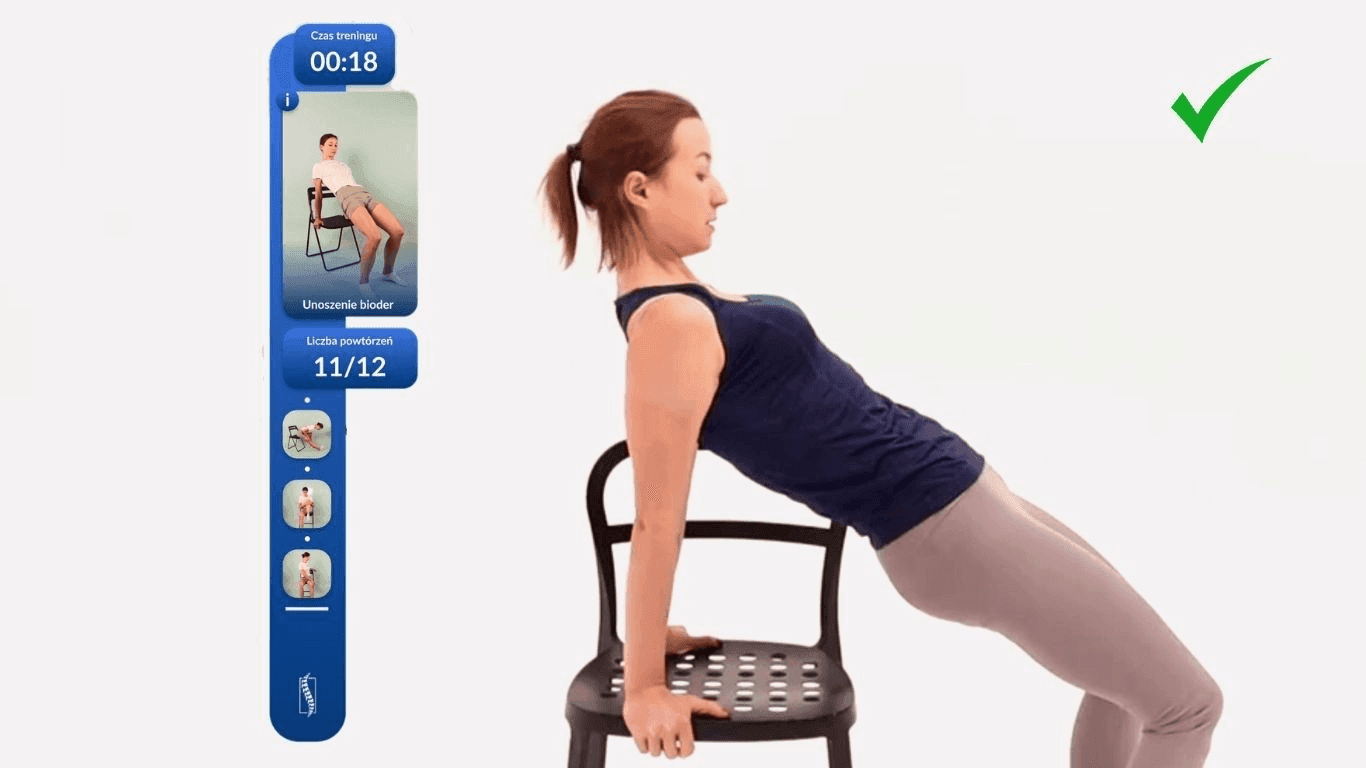
- Smart movement monitoring system FIXme stands out from other apps in that it not only suggests exercises, but actually monitors and verifies the correctness of their execution. Thanks to advanced motion recognition algorithms, the app: Tracks performed exercises in real time Assesses posture and technique accuracy Provides immediate feedback Adjusts difficulty level to user capabilities It's like having a personal trainer watching over every movement, but available anytime and anywhere – directly at your workstation.
- Variety of exercises adapted to the office environment The FIXme app offers a rich catalog of exercises specifically designed for the office environment: Seated exercises that can be done without leaving your desk Standing exercises, ideal for short breaks Self-massage reducing tension in the most strained body parts Eye yoga reducing eye strain Facial massage counteracting tension in the jaw and head area Yoga and Pilates elements strengthening deep postural muscles Most importantly, all these activities require no outfit change or walking away from the computer, making them an ideal solution for busy professionals.
- Flexibility and personalization FIXme understands that every employee has different needs and preferences, which is why the app offers full flexibility: Three exercise session duration options: 3, 5, or 10 minutes Ability to independently select the type of activity Customizing break reminder frequencies Personalization of exercise routines based on individual needs As a result, the user maintains full control over their activity schedule, which significantly increases the chances of consistency – a key factor in preventing overload.
- Advanced motivation system Research shows that the biggest challenge in maintaining regular physical activity is motivation. FIXme solves this problem through: A point system rewarding exercise regularity and frequency The ability to create challenges within teams or the entire company Organizing events motivating shared activity Rewards for reaching consecutive engagement levels This gamified aspect of the app makes caring for health an enjoyable element of the daily routine rather than a burdensome chore. Benefits of implementing the FIXme app in an office environment
For employees:
- Reduction of pain symptoms associated with sedentary work
- Improvement of body posture and prevention of postural adaptations
- Reduction of tension and stress during the workday
- Increased concentration and productivity thanks to regular breaks
- Building healthy habits that translate into overall improved well-being
For employers:
- Decrease in absenteeism related to musculoskeletal disorders
- Increased team productivity and creativity
- Improvement of work atmosphere through shared challenges and activities
- Building a company image that cares about employee health
- A concrete return on investment through the reduction of costs associated with absenteeism and reduced efficiency
Organizational culture and movement at work
Implementing the FIXme app can become a catalyst for change across the entire organizational culture of a company. Regular exercise breaks, initially supported by the app, over time become a natural part of the workday. Employers increasingly recognize that:
- Short breaks for physical activity are not a waste of time, but an investment in efficiency
- Shared activities build bonds between employees and improve the atmosphere in the team
- Caring for the physical well-being of employees translates into their loyalty and engagement
- Prevention is significantly cheaper than treating health problems resulting from inactivity Thanks to FIXme, introducing a culture of movement in the office becomes simple and natural, does not require radical changes in work organization, and brings measurable benefits to both employees and the entire company.
Summary
Movement during the workday is not a luxury or a waste of time – it is a necessity for maintaining musculoskeletal health. Even a few minutes of breaks for simple exercises, repeated regularly throughout the day, can significantly reduce the risk of overload and associated pain symptoms. The FIXme app is an ideal tool supporting this need, combining a scientific approach to the problem with a practical, easy-to-implement solution. Thanks to smart monitoring features, a variety of exercises, and an advanced motivation system, FIXme effectively helps break down the barrier of inactivity in the office environment. Investing in regular microbreaks supported by the FIXme app is an investment in productivity, creativity, and long-term health. As research shows, people who take regular movement breaks not only suffer less frequently from pain, but also report higher job satisfaction and better concentration. Let us remember that even the best-designed ergonomic workstation will not compensate for a lack of movement. Our bodies were created for activity – and FIXme helps provide them with what they need, even in an office environment.