Published: Jul 2, 2026
Long car or plane journey? 5 exercises to get your body moving
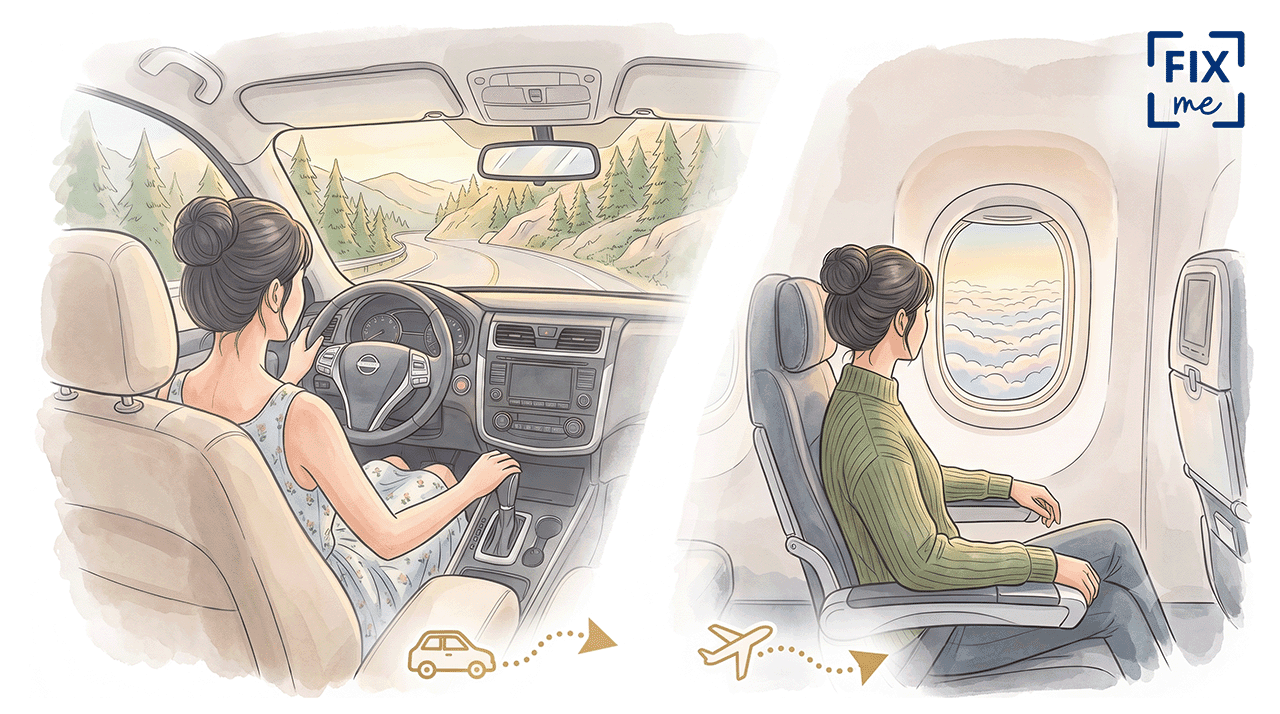
Six hours behind the wheel or in an airplane seat, and you get out with a body that no longer wants to cooperate. Stiff neck, heavy legs, lower back making itself felt with every step. I know this from every longer holiday trip. The good news is that you don't have to accept this. A few simple exercises for a long trip are enough to boost your circulation and get out in better shape. I'll show you five that I do myself, either sitting down or during a short break.

Małgorzata Świderska · 5 min read
What happens to the body during several hours of immobility
When you sit still in a tight space for a prolonged period, blood flow in your legs slows down. This is not a myth. The US CDC explicitly states that anyone traveling for more than 4 hours by plane, car, bus, or train may be at risk of developing a blood clot, precisely because they are sitting still in a confined space.
The longer the immobility lasts, the more pronounced the effect. A 2022 review in the journal *Wilderness and Environmental Medicine* calculated that the risk increases by about 26 percent with every additional 2 hours of flight, and for travelers it is on average about twice as high as for people who do not fly. Before you get scared, important context from the same study: in absolute numbers, this is still rare, roughly one case per 4,600 flights longer than 4 hours. So it's not about panicking. It's about a simple signal that movement during travel matters.
Let's even set aside the topic of circulation. Immobility itself brings stiffness, swollen ankles, and a drop in energy. On the other hand, even light movement breaking up prolonged sitting really helps. A 2022 meta-analysis in *Sports Medicine* showed that breaking up long sitting with a short walk improves blood sugar regulation better than just standing up. The conclusion is simple. You don't need feats of athleticism; you need regular micro-movement.
5 exercises for a long journey
You can do these exercises in a passenger seat, on a plane, and on a train. Each takes about fifteen seconds, so you can easily fit the whole set between one stretch of the journey and another. If you're driving, perform them only during stops, never while driving.
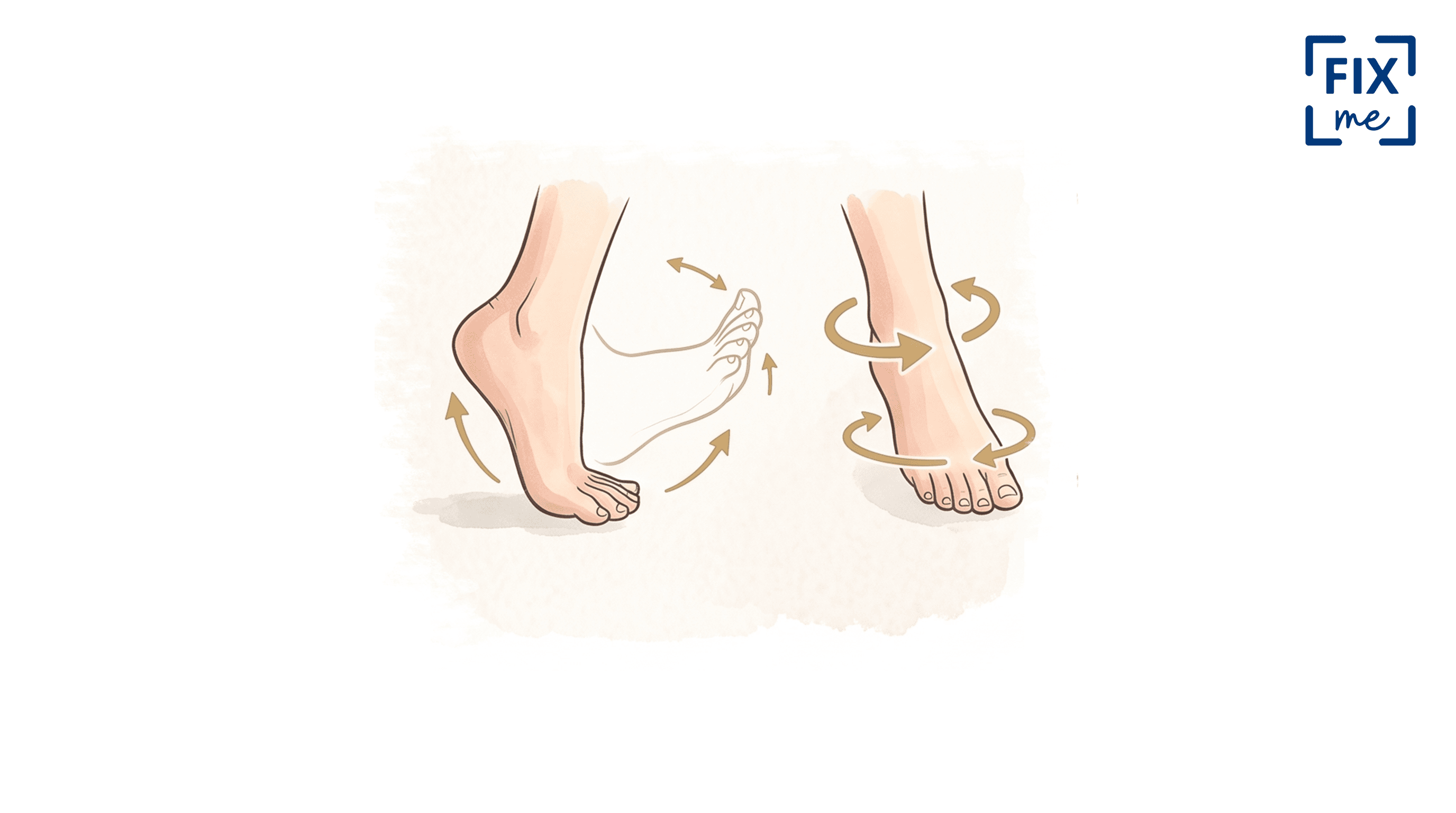
1. Foot pumps and ankle circles
Why: calves act like a pump that helps drain blood from the legs. Movement in the ankle activates it.
How: extend your legs as much as space allows. Flex your feet, pulling your toes toward you, and then point them away. Add 10 slow ankle circles in each direction. This is exactly the movement recommended by the CDC during long trips.
How many: about 20 repetitions, ideally once an hour.
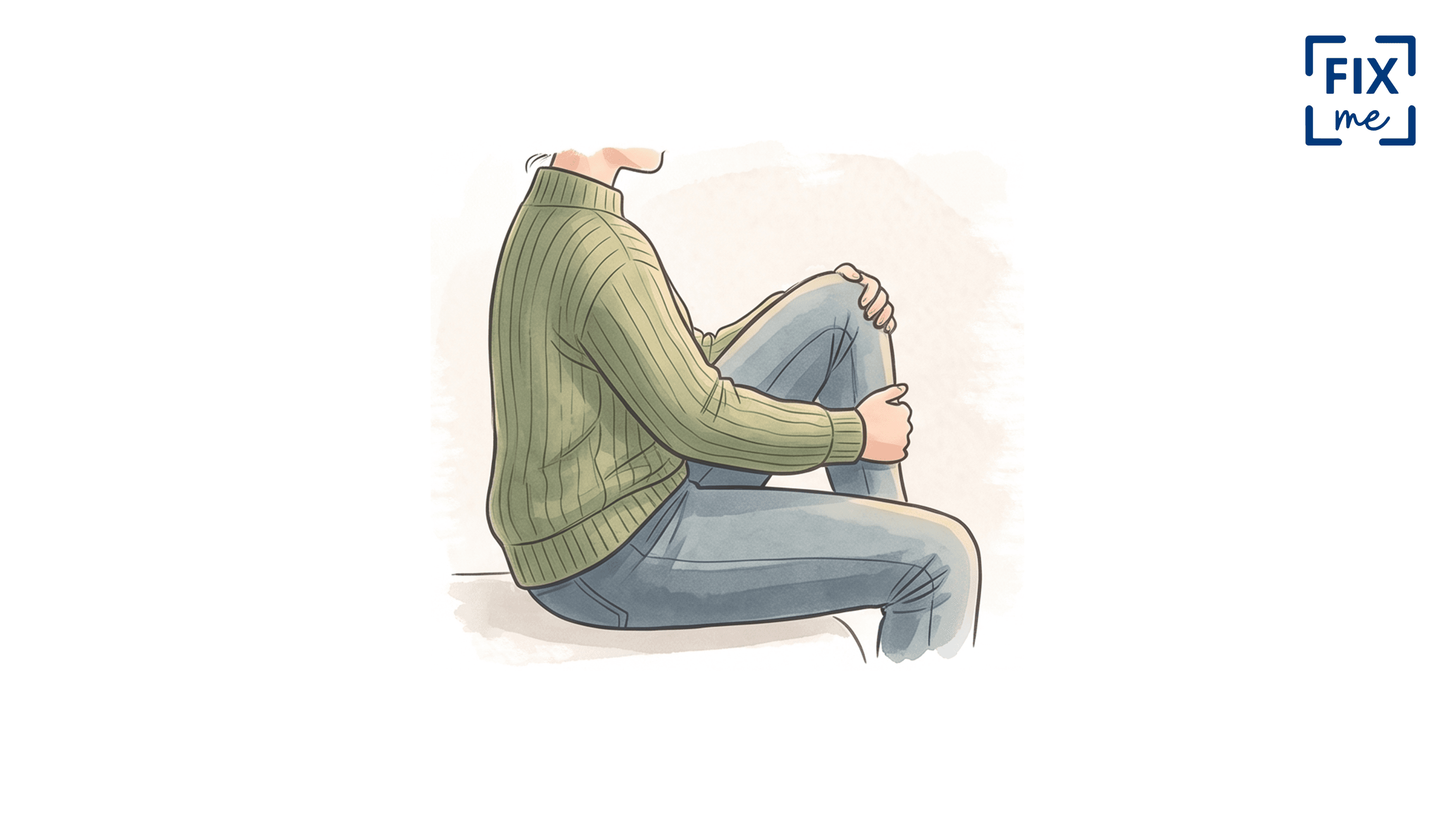
2. Knee lifts, or seated marching
Why: gets your hips and legs moving without getting out of your seat.
How: pull one knee toward your chest, hold it there for about 15 seconds, then switch legs. The CDC recommends the same routine, up to 10 repetitions on each side.
Common mistake: yanking the knee with your hands. The movement should be smooth, without straining your neck and shoulders.
3. Hamstring stretch
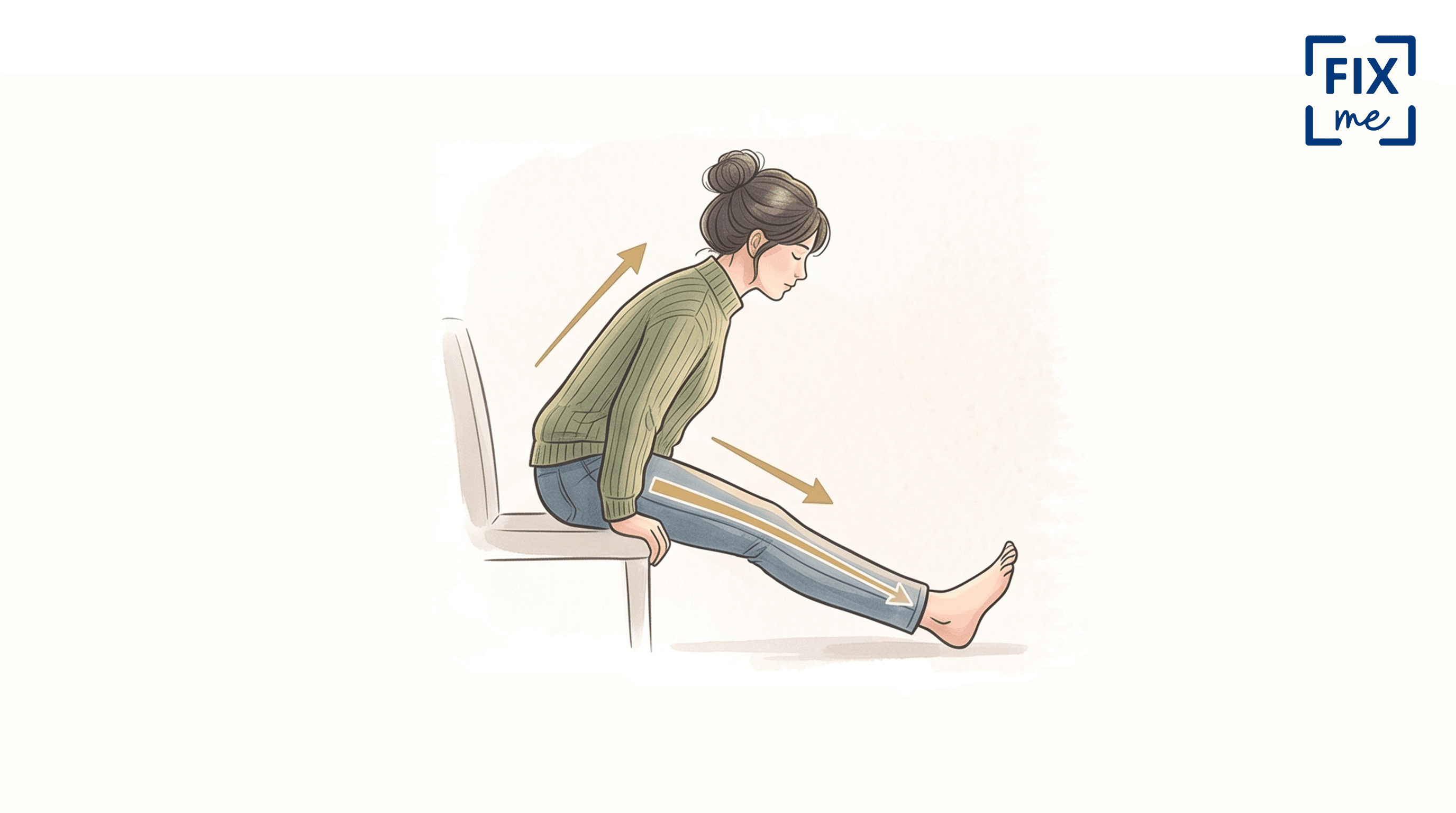
Why: after hours of sitting, the back of the thigh shortens and pulls on the pelvis, which impacts the lower back.
How: sit on the edge of the seat, extend one leg with your heel on the floor and toes pointing up. Straighten your back and gently lean forward from the hips until you feel a gentle stretch in the back of your thigh. Hold for 20 seconds per leg.
Common mistake: rounding your back instead of hinging from the hips. Your back stays straight while you bend at the hip.
4. Torso rotation
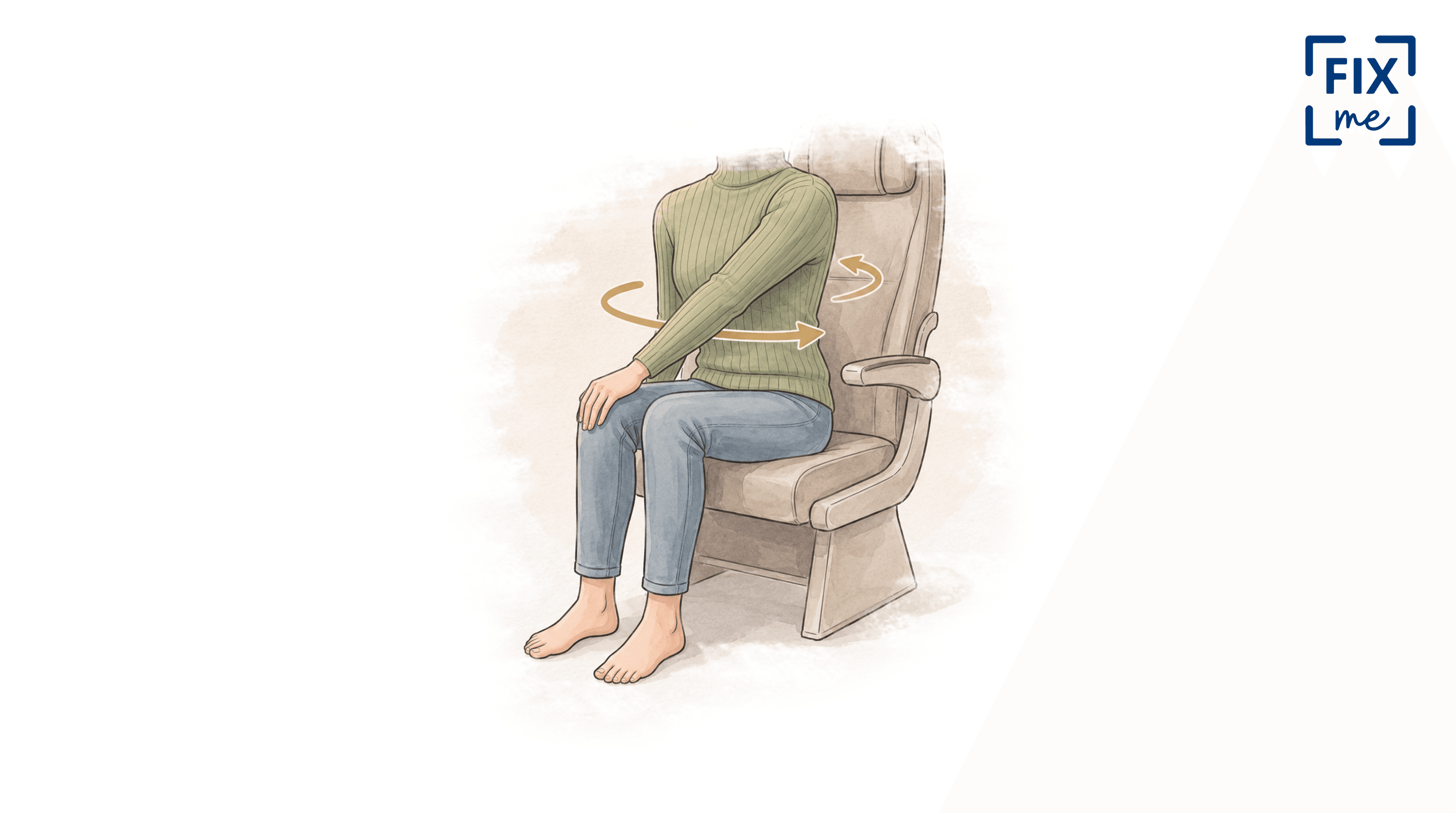
Why: the thoracic spine doesn't like prolonged immobility in one position. A twist restores some mobility to it.
How: sit up straight with your feet flat on the floor. Place your right hand on your left knee and slowly twist your torso to the left, leading the movement from your ribs, not your neck. Breathe comfortably, and with each exhale, deepen the twist by millimeters, without jerking. Hold for a few breaths and switch sides.
5. Shoulder circles and neck relaxation
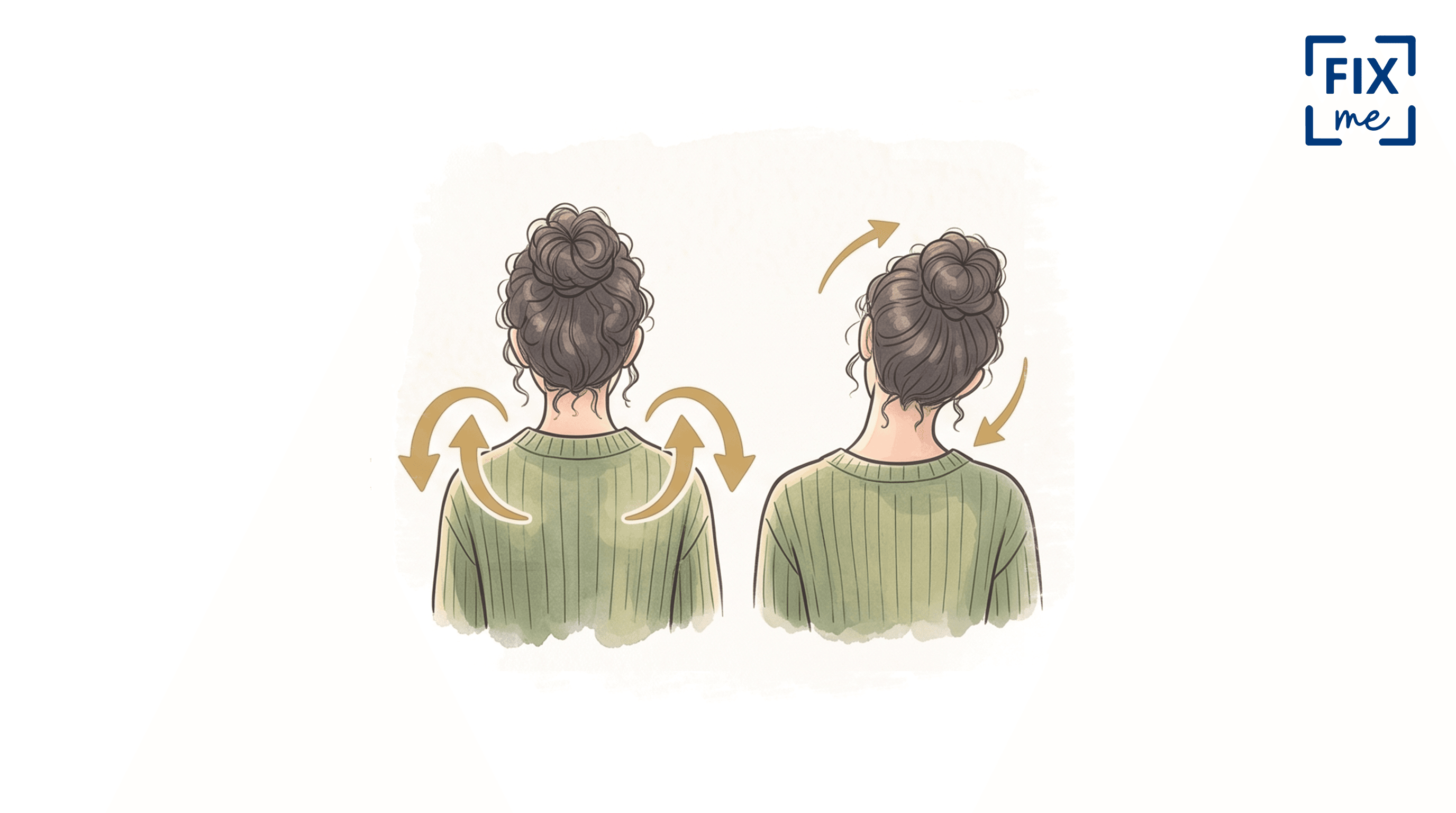
Why: holding a steering wheel or phone for hours tenses your neck and shoulders more than you think.
How: raise your shoulders to your ears, roll them back, and lower them down, making large circles. Do 10 repetitions. Then gently tilt your ear toward your shoulder, first to one side, then to the other, avoiding sudden movements.
Golden rule: move every 1 to 2 hours
Individual exercises in your seat are great, but standing breaks make the biggest difference. On a road trip, plan a stop every 1 to 2 hours, get out, and take a few dozen steps. The easiest way is to tie it to the route rhythm. Refueling, coffee for the driver, a short walk around the car. One break, three things taken care of. On a plane, walk down the aisle, and if you can, choose an aisle seat. The same 2022 study noted that a window seat, which makes getting up harder, was associated with a higher risk.
Drink water regularly. The CDC emphasizes avoiding dehydration while traveling. And remember the rule from the previous section: even a short walk to the restroom works in your favor.
FAQ
- Can I do these exercises while driving a car?
No. Behind the wheel, do them only during stops. While driving, your only role is driving safely.
- I have very little space on the plane. Which exercises are suitable?
You can do foot pumps, ankle circles, and shoulder circles even in a middle seat without disturbing your neighbors.
- How often should I repeat them?
Roughly once an hour for the seated routine, plus a longer standing break every 1 to 2 hours.
- When should special caution be exercised?
If you have had recent surgery, are pregnant, have a history of thrombosis, or have other risk factors, discuss your long travel plans with a doctor.
Do you like having a guide who makes sure you move when you need to? In the FIXme app, a virtual physical therapist guides you through a short active break and ensures the correctness of each repetition. See how it works: FIXme - Test 14 days for free
Learn more
Discover more from the latest posts.