Published: Oct 29, 2026
Is “Dead Butt” a Myth? What Really Happens to Your Hips After an Evening on the Couch
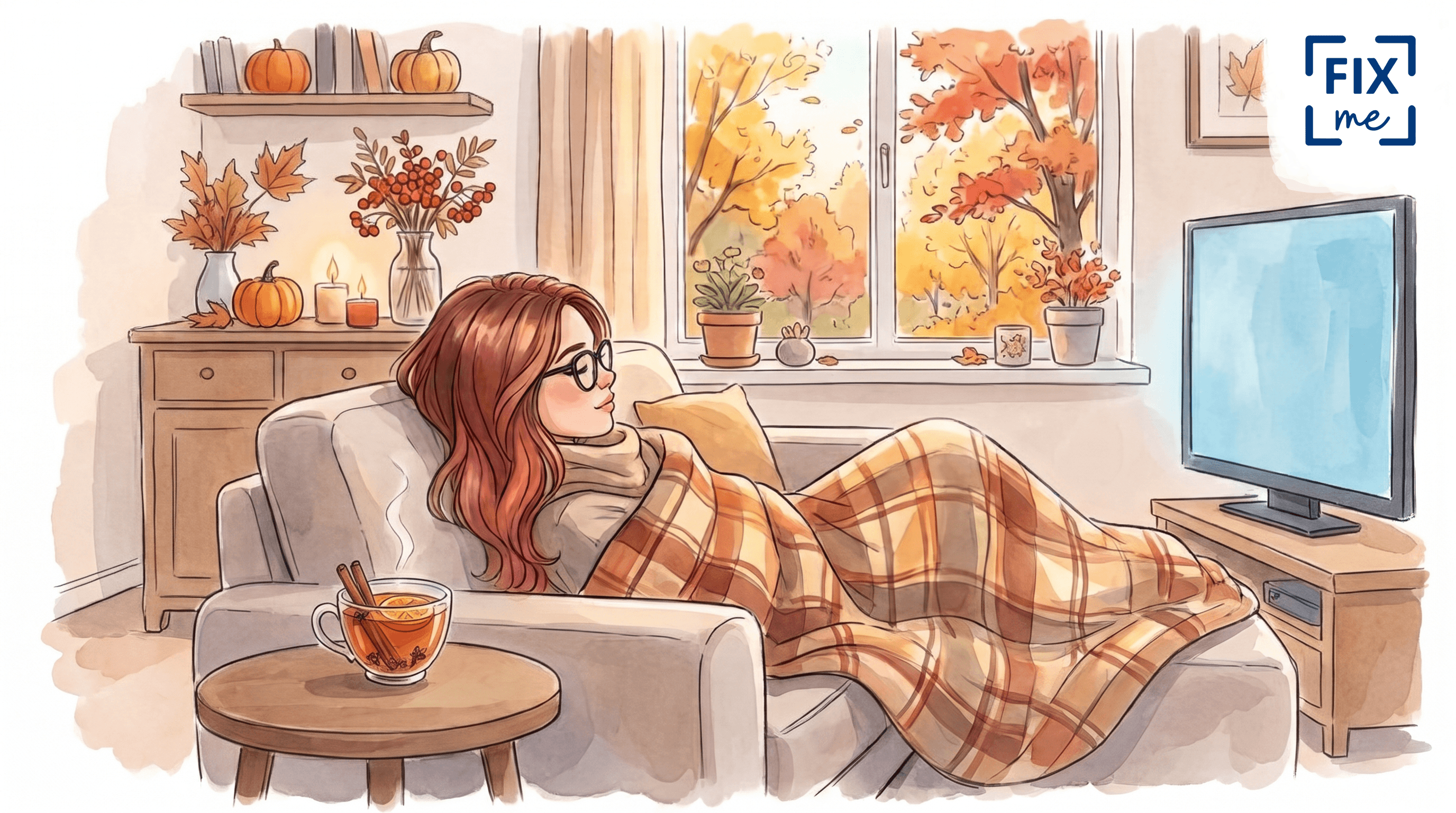
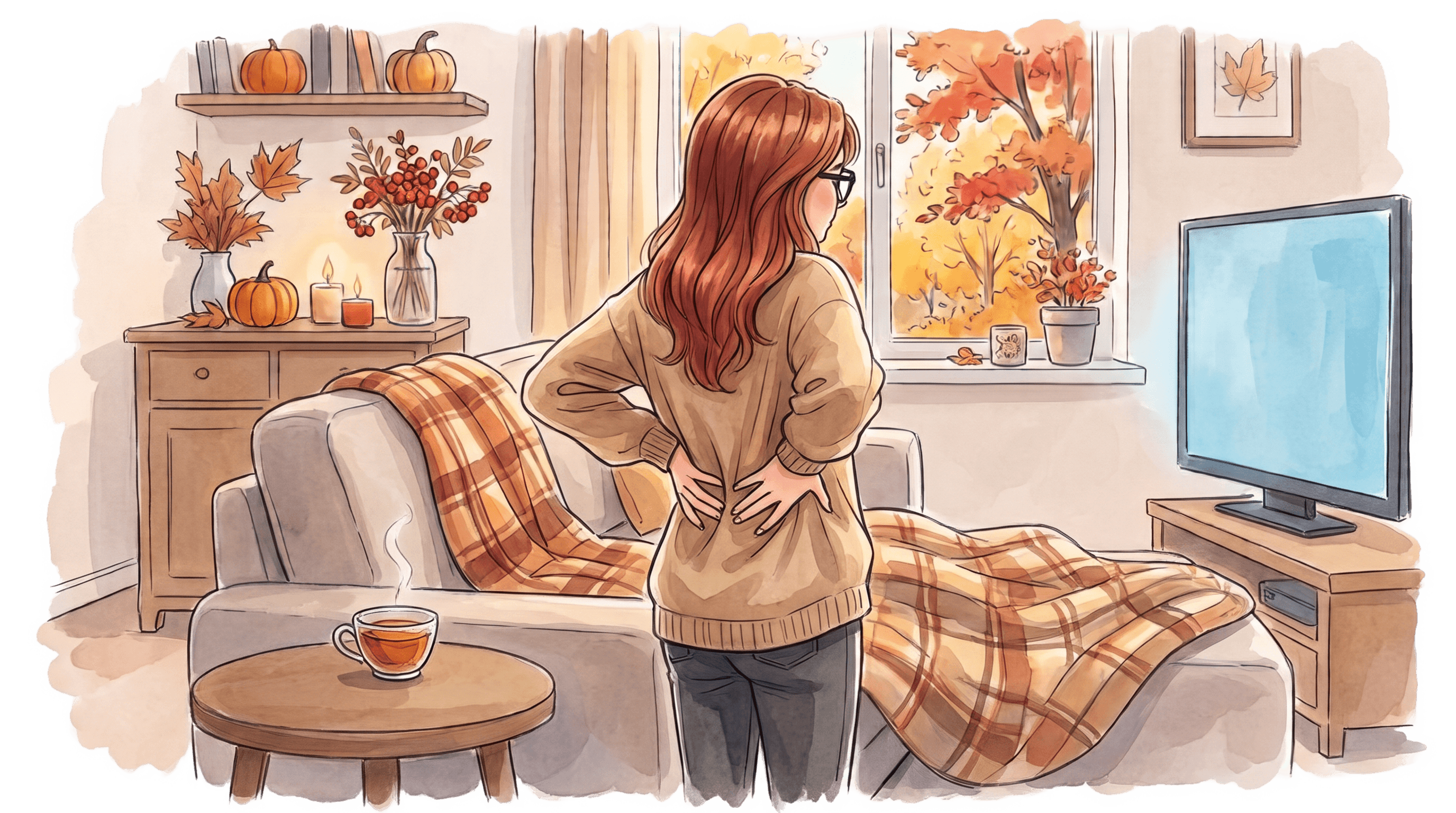
An October evening: a blanket, a TV show, a phone in hand, and legs tucked underneath you. After three episodes, you get up, and your hips and lower back are as stiff as a rusty hinge. The internet quickly suggests a name: dead butt syndrome. Before you start worrying about it, let's see what research says about this term and about back pain from sitting on the couch.

Małgorzata Świderska · 7 min read
Does “Dead Butt” Even Exist?
In English, it's called “gluteal amnesia” or “dead butt syndrome”. It sounds scientific, but it's a colloquial term. I browsed scientific publication databases and found no studies that measured this phenomenon or showed that sitting “turns off” the glutes. The term only appears in passing mentions, without its own data.
The name appears, among other places, in a telemedicine hip examination guide (Vomer et al., Cureus, 2023), where it was equated in a single sentence with gluteus medius tendinopathy. That is something completely different from “glutes put to sleep by the couch”.
So what are you feeling after an evening under a blanket? Most likely ordinary stiffness and discomfort from prolonged inactivity. Unpleasant, but without any underlying diagnosis.
In Autumn, the Couch Wins Over Movement
A systematic review of 26 studies from 18 countries, covering 9,300 people (Garriga et al., International Journal of Environmental Research and Public Health, 2021), showed a clear pattern. In summer, we move the most, in winter the least, and time spent sitting shifts in the opposite direction.
Autumn leads toward this winter slump. It gets dark earlier, an after-work walk loses to the blanket, and an evening watching a show easily turns into three hours without getting up.
Every year in October, I hear a similar sentence in the office: “I don't lift anything, I just lie on the couch in the evening, and my lower back is stiff.”
Back pain from sitting on the couch: what the research says
Here's the good news. A review of 10 cohort studies (Damato et al., European Journal of Pain, 2022) examined whether people without lower back pain who sit a lot are more likely to start experiencing it. They were not more likely than others: the authors concluded that sitting probably does not contribute to a new episode of lower back pain, with moderate certainty of evidence.
The situation is different when your lower back is already bothering you. A review of 16 longitudinal studies (100,002 participants) with meta-analysis (Alzahrani et al., PeerJ, 2022) showed that sitting for at least 3 hours a day was associated with greater limitations in daily functioning in people with lower back pain. But not with pain intensity itself. The authors note that the findings are preliminary because the studies mostly relied on self-reporting.
None of these studies dealt specifically with the couch. They speak about sitting in general. However, the conclusion is consistent: sitting alone probably does not cause new lower back pain, but with existing discomfort, it is better to break it up.
There is no ideal posture, there is the next posture
In a randomized experiment, 25 healthy individuals typed on a computer for 15 minutes in four different postures (Christensen et al., Applied Ergonomics, 2023). Each of them increased neck pain by at least 2 points on a 10-point scale, which is noticeable. Slouching without forearm support fared the worst. This is a small sample and a short test, but the message is simple: even a good posture maintained for a quarter of an hour does not protect against discomfort.
It's similar with the phone. In a study of 30 healthy adults (Liu et al., Journal of Physical Therapy Science, 2025), the head and trunk gradually dropped over 30 minutes of smartphone use. In cross-legged and side-sitting positions, uneven pressure on the buttocks also increased. However, the study examined sitting on the floor, not on the couch, and pain was not measured.
A meta-analysis of 7 studies involving 10,715 people (Chen et al., Postgraduate Medical Journal, 2025) links excessive smartphone use to neck pain (adjusted odds ratio 2.34). However, these are retrospective studies and show an association, not causation.
Steps, Not Just Standing Up
It's tempting to just stand by the window.
A study of 224 desk workers whose time spent sitting, standing, and walking during the day was measured with a sensor (Dzakpasu et al., Medicine & Science in Sports & Exercise, 2023) showed something interesting. After 3 months, more standing was associated with increased musculoskeletal symptoms, and more steps with their reduction. After 12 months, neither of these changes had a significant association with pain anymore.
In practice: between episodes, walk to the kitchen, do a lap around the apartment, take out the trash. It's about movement, not switching from the couch to standing still.
Four movements for hips and lower back after watching a show
Perform these movements on a stable chair, preferably one with armrests. A soft couch sinks, which interferes with bridging. Move slowly, within a range where you feel a stretch, not sharp discomfort.
1. Hip bridging
Sit with a straight back, feet flat on the floor, hands on the armrests. Lift your hips, squeezing your glutes and abdomen, until your body forms a line from knees to shoulders. Hold for 2 to 3 seconds and slowly return. Eight repetitions.
2. Crossed-leg forward bend
Sit up straight and place the ankle of one leg on the knee of the other. Slowly lean your torso forward, as if bringing your chest closer to the crossed leg, and hold for at least 3 seconds. Five times on each side. Many people feel a stretch in the glute and the side of the thigh.
3. Thigh-to-chest pull
Feet hip-width apart. Bend one knee and pull your thigh toward your abdomen, clasping the knee with both hands. Hold for about 10 seconds and switch legs. Six alternating repetitions.
4. Diagonal bend
Move to the edge of the chair, feet wide apart, hands on your knees. Lean forward diagonally, as if bringing your shoulder closer to the opposite knee, and hold for 3 seconds. Keep your buttocks on the seat. Twelve alternating repetitions.
The whole routine takes a few minutes, which is about as long as a show's intro and a tea break.
When to hold off and consult a specialist
Stop exercising and contact a specialist if you experience chest tightness or discomfort, dizziness, spots in your vision, sudden shortness of breath, heart palpitations, or sharp pain during movement. The same applies to numbness or tingling in the leg that does not subside after changing positions.
Also hold off if you have a fever or infection, after an injury or procedure without your managing specialist's approval, and if you are being treated for chronic heart or circulatory conditions and do not have confirmation that such movement is safe for you.

FAQ
- What is dead butt syndrome?
It's a colloquial term, not a diagnosis. There are no studies showing that sitting “turns off” the glutes. Stiffness after prolonged sitting is rather just ordinary discomfort from inactivity.
- Can sitting on the couch cause back pain?
A review of 10 cohort studies (2022) did not show that sitting increases the risk of a new episode of lower back pain. However, in people who already experience it, sitting for at least 3 hours a day was associated with greater limitations in daily functioning.
- Is it better to stand than to sit?
Not necessarily. In a study of 224 office workers, more standing was associated after 3 months with greater symptoms, while more steps were associated with fewer. What matters is movement, not just standing up.
- How often should you change position while watching a show?
There is no single proven rule. In a 2023 experiment, just 15 minutes of typing on a computer in one position was associated with neck pain, so it makes sense to stand up and walk around at least between episodes.
The hardest part isn't getting off the couch, it's remembering to do so. In the FIXme app, breaks remind themselves, and in the Lumbar Comfort program, a virtual physical therapist guides you through movements for your hips and lower back. The camera checks whether you are performing them correctly and counts repetitions for you.
See how it works: sign up