Published: Nov 26, 2026
Do you have an afternoon headache? Find out how much water to drink a day on cold days
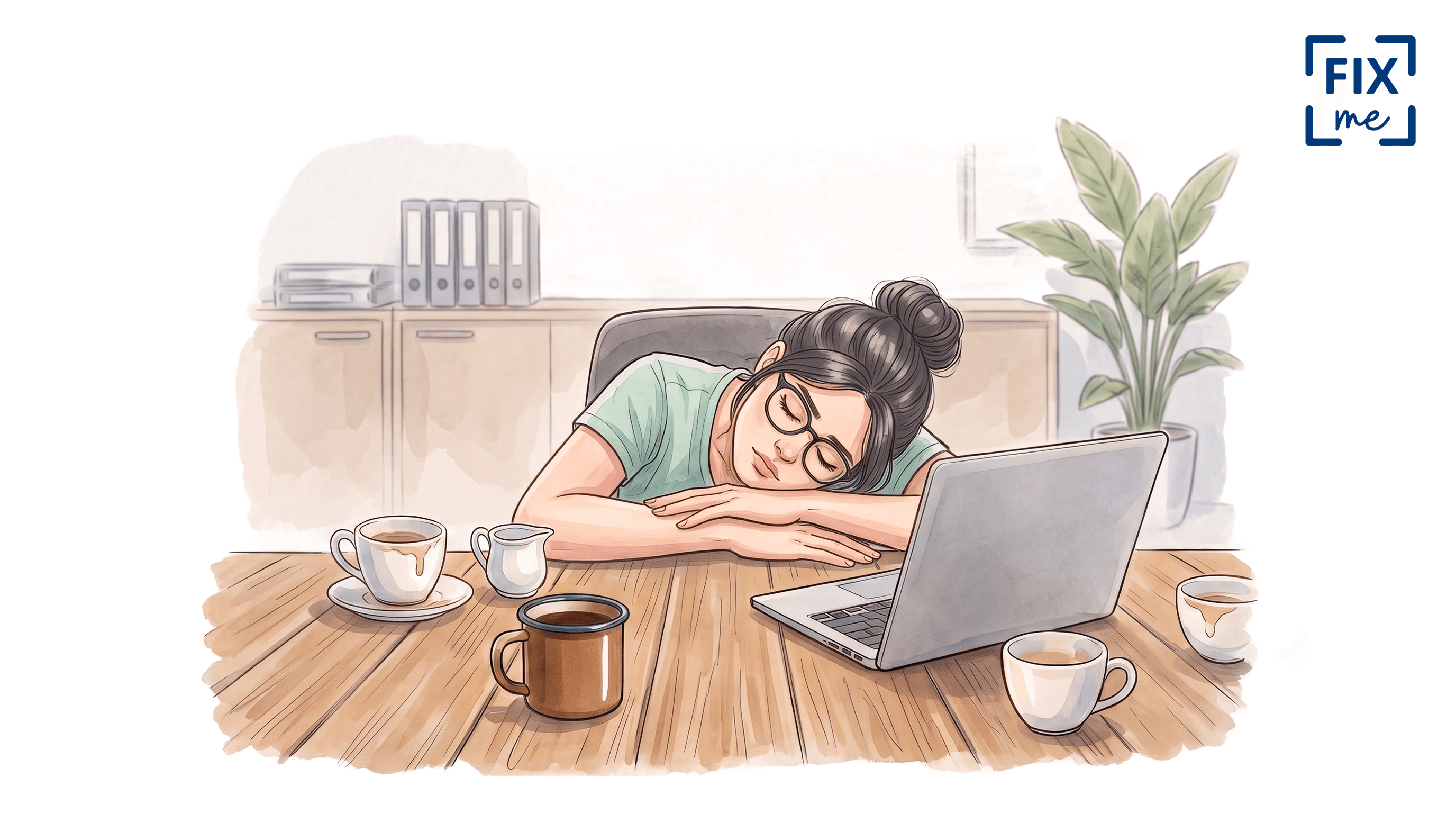
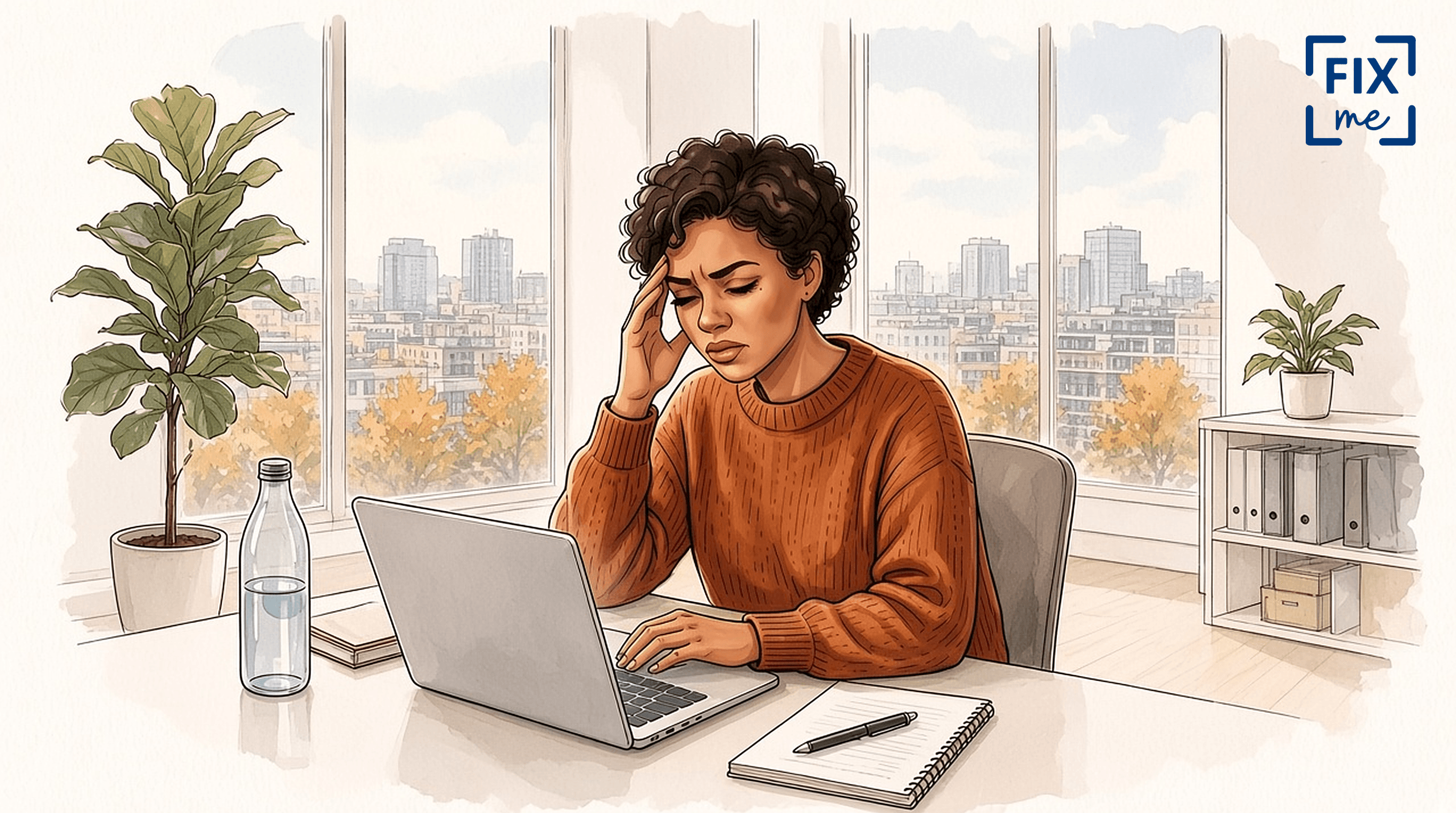
It's afternoon, the radiator is running, and on the desk sits a mug of tea that went cold before midday. Your head feels heavy, and the letters on the screen seem to blur. In summer you reach for water instinctively; in autumn you forget about it. Before you blame it all on the weather, check how much water to drink a day according to official guidelines and what research actually says about its link to headaches.

Małgorzata Świderska · 6 min read

How much water to drink a day: what the EFSA says
The European Food Safety Authority (EFSA) has set adequate water intake for adults at 2.0 litres per day for women and 2.5 litres for men. The catch is in the details. This is total water: from drinking water, beverages of all kinds, and moisture contained in food. Tea, soup, and an apple count too.
Second: these values apply to moderate ambient temperatures and moderate physical activity. That's why you won't find the magical "eight glasses" here or a separate guideline for winter. The EFSA also describes what happens during a deficit: a loss of about 1% of body weight as water is usually compensated for within 24 hours. Physical and mental performance begins to decline only when deficits accumulate without being replenished.
Can too little water cause headaches? Research is more cautious than the internet
A 2012 study is often cited (Armstrong et al., Journal of Nutrition). It involved 25 young women who were brought to an average body mass loss of 1.36% through exercise, and in one trial additionally through a diuretic. The result: worse mood, harder concentration, tasks felt more demanding, and headache symptoms appeared more frequently on questionnaires. However, most cognitive performance tests showed no changes.
Now, the other side. A randomised trial conducted in family practice clinics (Spigt et al., Family Practice, 2012) included 102 people with recurrent headaches who initially drank less than 2.5 litres of fluids a day. Both groups received advice on stress and sleep, and one group was additionally instructed to drink 1.5 litres more water per day for 3 months. In the group drinking more, headache-related quality of life increased by 4.5 points, and 47% reported "great improvement" compared to 25% in the control group. However, this was self-reported, and participants knew whether they were drinking more. The number of days with at least moderate headache did not change significantly.
A 2021 review (Arca and Halker Singh, Current Pain and Headache Reports) reminds us that "water-deprivation headache" is not recognized as an independent (primary) headache disorder in the international ICHD-3 classification, and its descriptions are based on a small case series. The authors acknowledge that dehydration itself can trigger a headache, but it more commonly exacerbates existing conditions.
The picture is similar when it comes to concentration: newer data are mixed, as the researchers themselves acknowledge. In 78 middle-aged and older adults, dehydration was associated only with poorer sustained attention, and not with other cognitive tests (Rosinger et al., American Journal of Human Biology, 2024). In a 2026 randomised trial, 64 students were given varying amounts of water or none after 12 hours without drinking, and there were no differences in cognitive test results between the groups (Zhang et al., Frontiers in Nutrition).
In short: insufficient fluid intake can contribute to afternoon fatigue, but don't treat water as a headache cure.

Why it's easier to forget to drink on cold days
In a small 2004 experiment (Kenefick et al., Medicine & Science in Sports & Exercise), men walked in T-shirts and shorts in a 4-degree environment. The cold reduced thirst by up to 40%. The groups consisted of 8 and 9 people, and conditions were far from a heated office, so it doesn't follow that everyone is dehydrated in autumn. However, after prolonged exposure to the cold, don't rely on thirst alone.
Then there is the air. A 2024 review (Wolkoff, International Journal of Hygiene and Environmental Health) shows that dry office air is linked to more frequent eye and respiratory complaints, as well as lower productivity at work. The author points to 40 to 60% relative humidity as the most beneficial range for the respiratory tract. However, this is dryness of the eyes and mucous membranes, not systemic dehydration. An extra glass of water won't humidify the room, and taking a short break to look away from the screen is a sensible addition for tired eyes.
During the heating season, I see the same scene on many desks: a full bottle of water that no one has opened since morning.
It's not that water is lacking. What's lacking is the moment someone actually gets up.

Water as an excuse for a break: a simple habit
I'm not encouraging you to count millilitres. A simple ritual works better. Place a glass or bottle within sight. Refill it during every break. And walk to the kitchen for water—preferably the one further away—because the walk itself is already a microbreak from sitting.
Since you're already standing by the kettle anyway, add three movements. They take about 2 minutes.
1. Arm raises with breathing
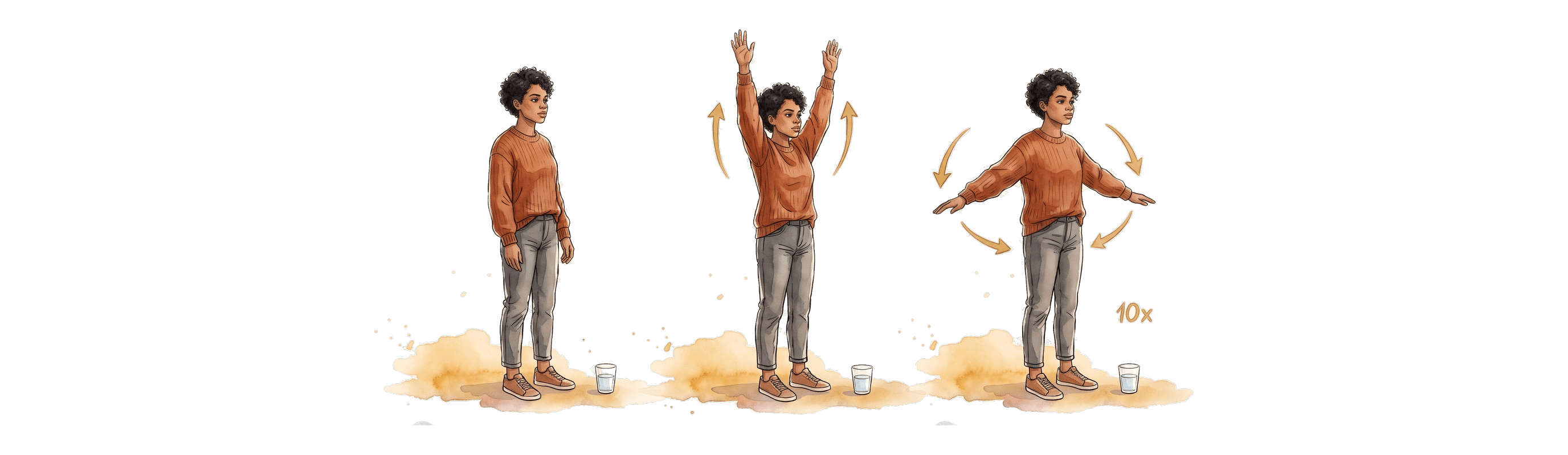
Stand up straight. Inhale and raise both arms overhead, reaching as high as possible. Exhale and slowly lower them out to the sides. Ten repetitions at a calm pace.
2. Torso rotations
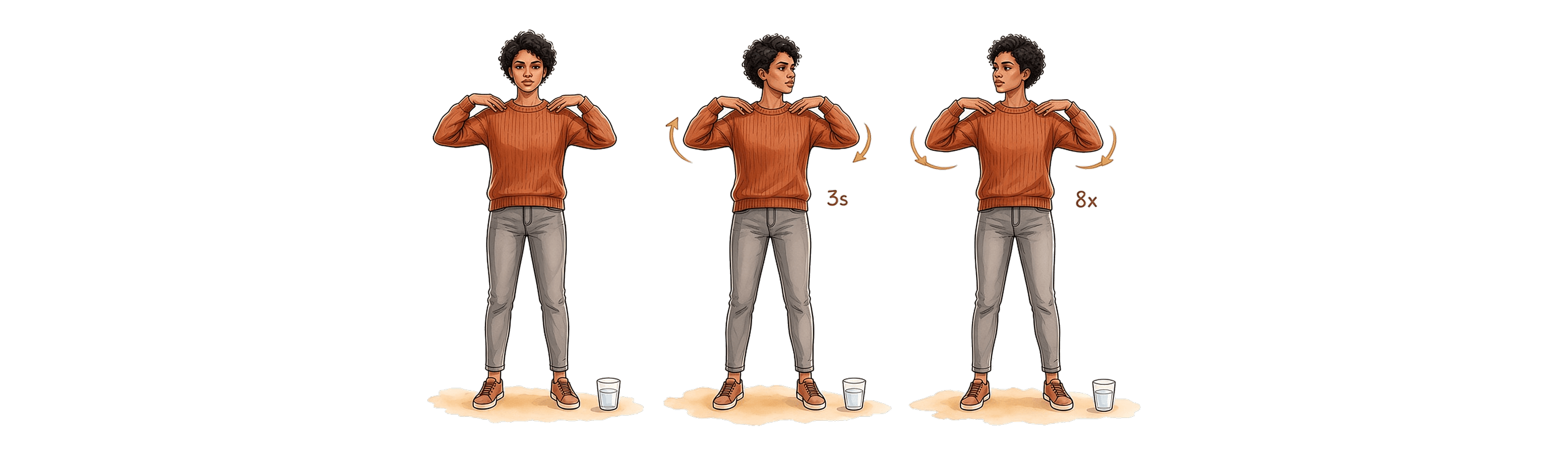
Rest your hands on your shoulders, keeping your shoulders away from your ears. Slowly rotate your torso to the right, hold for about 3 seconds, return, and rotate to the left. Keep your hips stationary. Eight times per side.
3. Head semi-circles

Shoulders relaxed, back straight. Tilt your head to the right side, then trace a semi-circle downward, chin close to your chest, all the way to the left side. Return along the same path. Five times in each direction, without sudden movements.

When to back off and consult a specialist
Stop exercising and contact a specialist if you experience chest tightness or discomfort, dizziness, spots before your eyes, sudden shortness of breath, heart palpitations, or sharp pain during movement. Also hold off if you have a fever or infection, after an injury, or after a procedure without clearance from your attending specialist.
A headache itself can also be a warning sign that can't be resolved with water. A sudden thunderclap headache, as well as a headache accompanied by fever, loss of vision, or sudden neurological symptoms, requires urgent medical evaluation.

FAQ
- How much water should you drink a day in winter?
The EFSA does not provide a separate guideline for winter. For adults, it recommends 2.0 litres per day for women and 2.5 litres for men, including beverages and water from food, under moderate temperatures and moderate physical activity.
- Do tea and soup count toward water intake?
Yes. The EFSA figures include drinking water, beverages of all kinds, and moisture contained in food.
- Does drinking more water help with headaches?
In a 2012 randomised trial, drinking an extra 1.5 litres per day improved headache-related quality of life in people with recurrent headaches, but this was based on self-assessment. It did not, however, significantly change the number of days with at least moderate pain.
- Does dry office air dehydrate the body?
Studies link dry air to eye and respiratory complaints, rather than total body dehydration. The author of the review indicates 40 to 60% relative humidity as the most beneficial range for the respiratory tract.
You have to get up for water anyway, so make it a movement break. The FIXme app will let you know when it's time. A virtual physiotherapist will demonstrate the movements, and the camera will check if you're doing them correctly and count your repetitions. See how it works: sign up