Published: Jul 16, 2026
Movement instead of coffee: how to regain energy and focus at work without caffeine
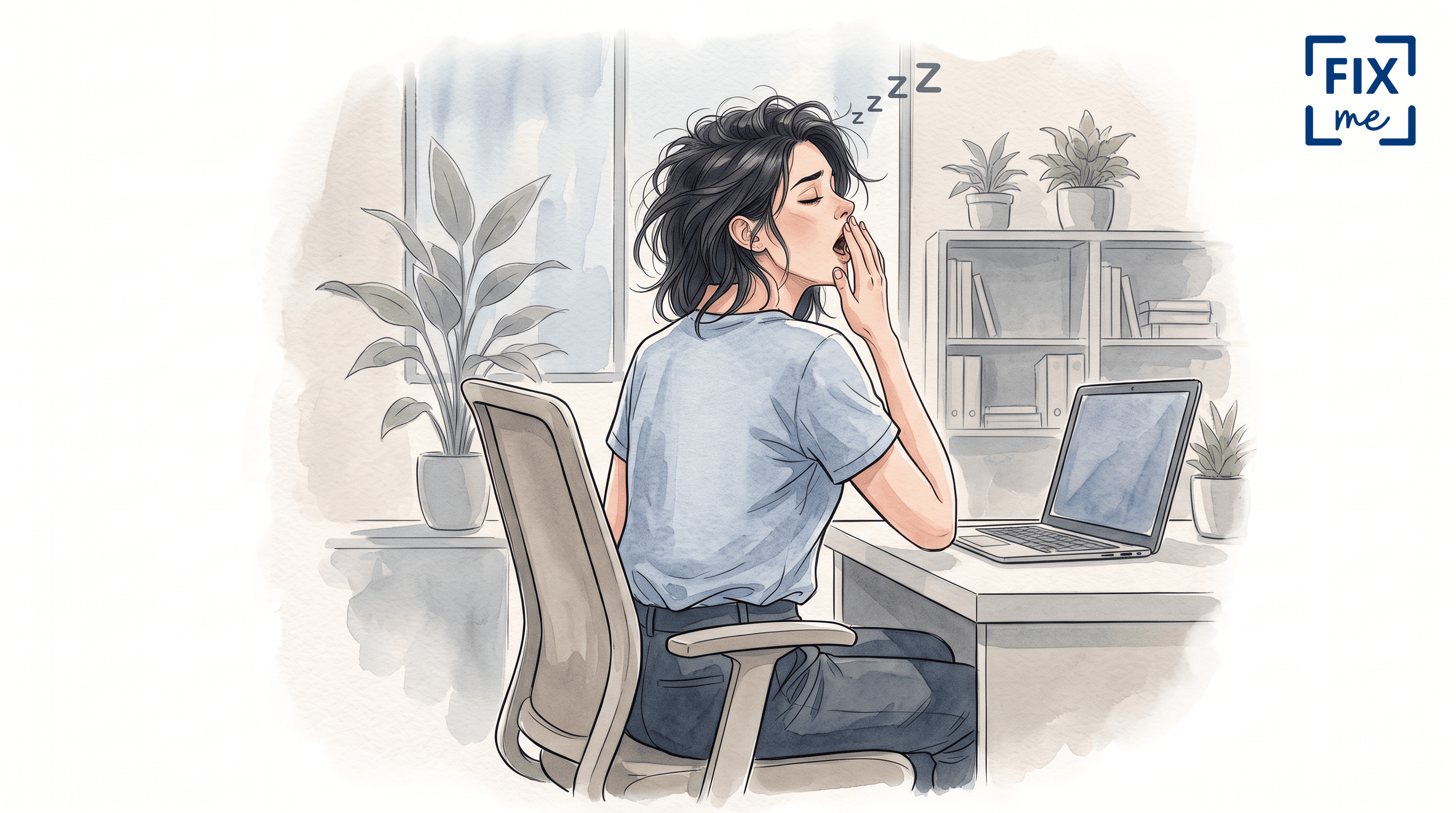
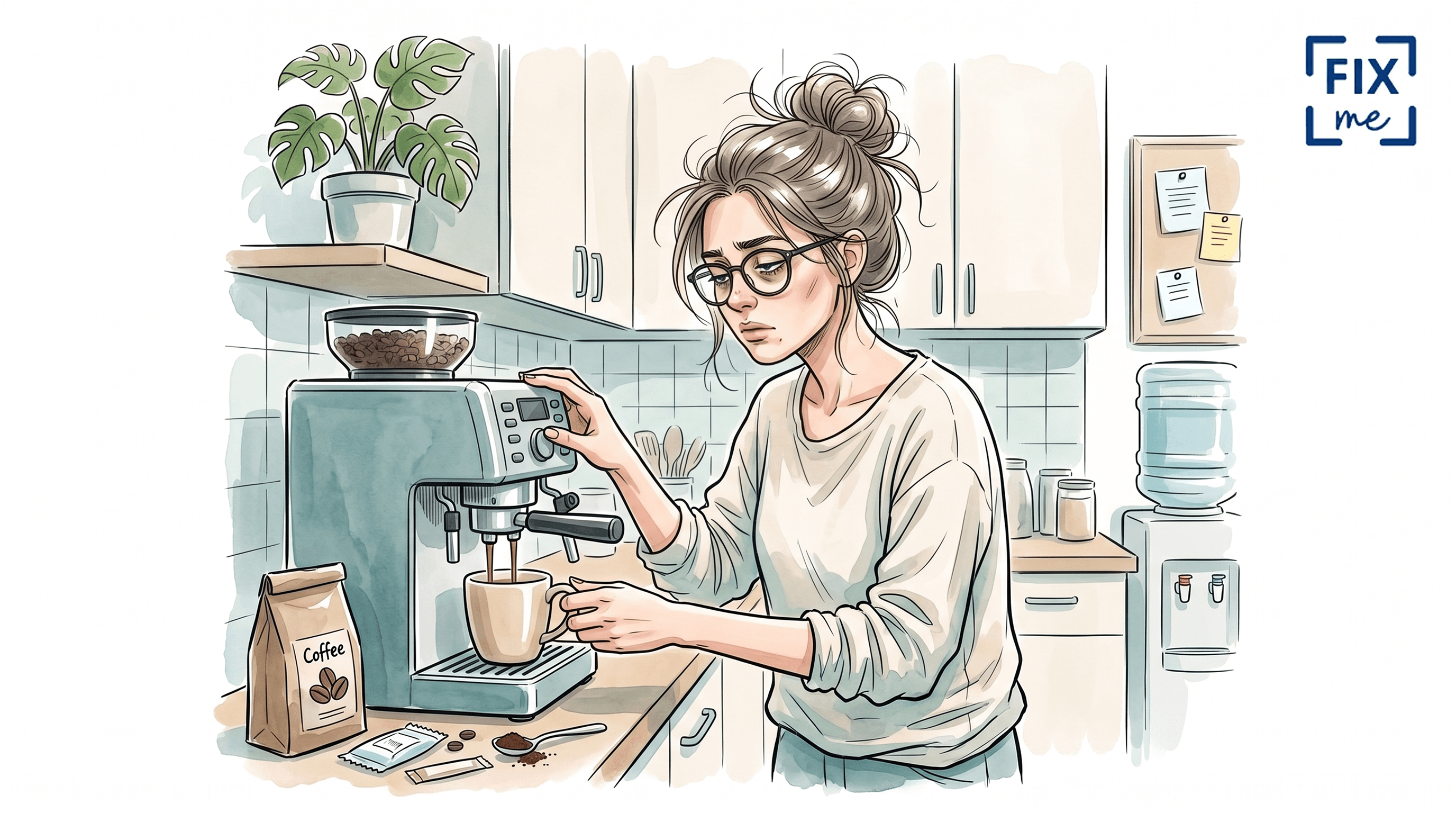
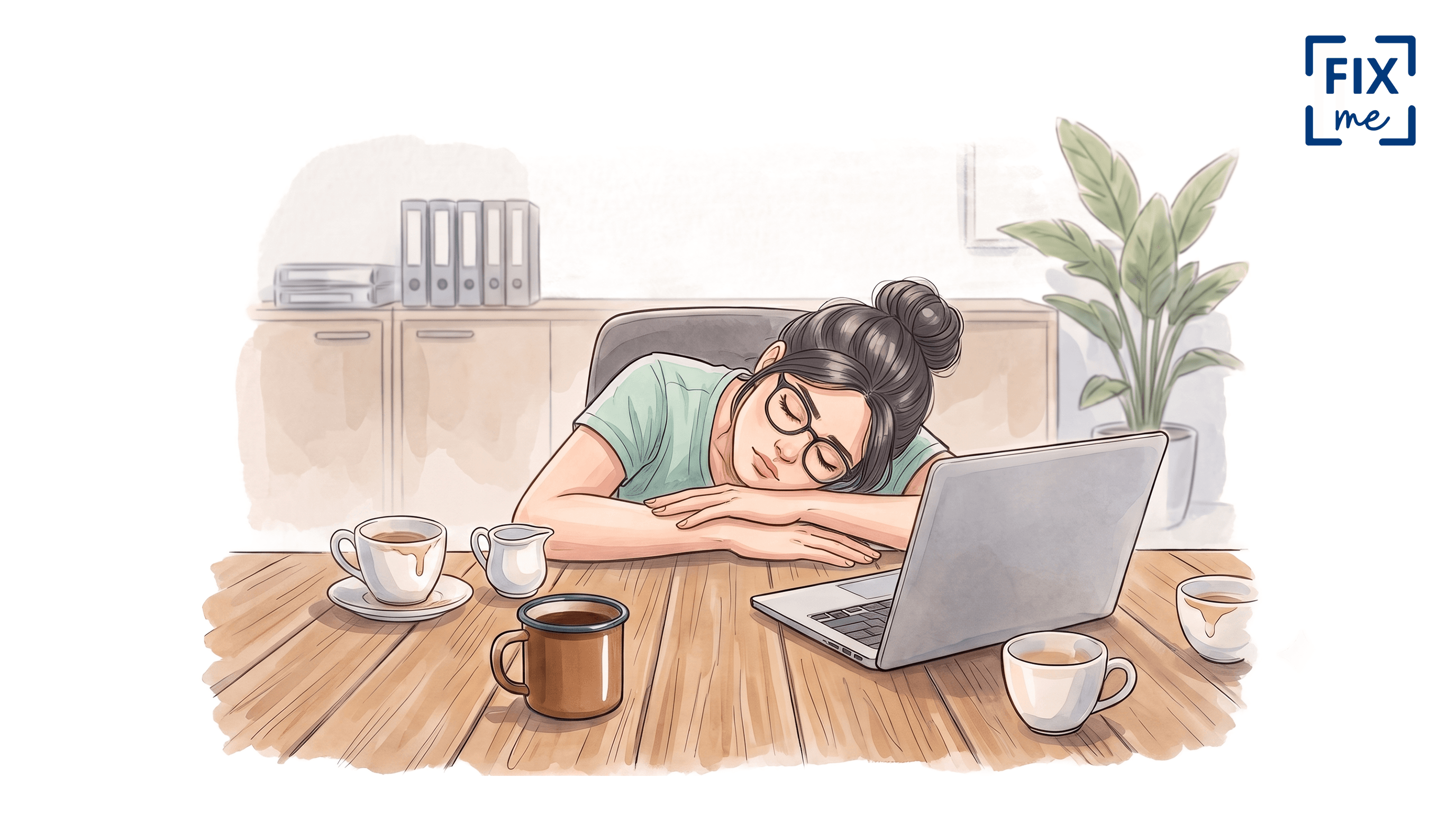
I know that moment. It's 3 p.m., the screen starts to blur, and your hand reaches for the coffee machine on its own. Building FIXme, I see up close how offices operate, so I'll put it bluntly: that second cup of coffee after lunch rarely saves the day. It gives you a spike followed by an even deeper crash. This article is about why movement instead of coffee provides more consistent energy and better focus at work, without the roller coaster you know all too well. I'm not declaring war on caffeine. I'm showing its limits and a cheaper alternative that's right at your fingertips.

Tomasz Świderski · 6 min read

What coffee really does to your head
Coffee doesn't add energy. It borrows it. Caffeine acts as an adenosine receptor antagonist, meaning it blocks the molecule that builds up during the day and tells the brain to "slow down, time for sleep." That's how a 2022 review by Reichert and colleagues in the *Journal of Sleep Research* describes it. Adenosine continues to accumulate, but you just don't feel it for a while. Once caffeine fades, the signal returns compounded. Hence the crash.
One key number matters. According to the 2024 StatPearls clinical manual, the half-life of caffeine in an average adult is about 5 hours. That means after five hours, half the dose is still circulating in your body. A coffee drunk at 3 p.m. is still working at half power at 8 p.m.
And here it gets interesting for anyone complaining about poor sleep. Reichert's review shows that caffeine close to bedtime delays sleep onset and lowers sleep efficiency. A 2025 study by Gardiner and colleagues in the journal *Sleep* specifies: a standard mug of coffee, around 107 mg of caffeine, is best consumed no later than nearly nine hours before sleep if you don't want to shorten your night's rest. So afternoon coffee steals twice. First, it postpones the crash by a few hours, and then it chips away at your sleep, leaving you reaching for a mug again the next day. The cycle continues.

Why movement provides more consistent energy
Movement works opposite to caffeine. It doesn't mask fatigue; it actually boosts alertness, and it does so without a sudden crash an hour later. That's not my opinion; it's the conclusion of a meta-analysis.
Albulescu and colleagues in 2022 in *PLOS ONE* analyzed 22 research trials, totaling over 2,300 people, testing the impact of microbreaks—short breaks from a task lasting up to 10 minutes. The result: microbreaks significantly increased vigor and reduced fatigue, in both cases with an effect size of around d = 0.35 and p below 0.001. In plain language, a short break genuinely boosts energy and reduces weariness in a measurable way.
Importantly, the same authors honestly note that for highly demanding cognitive tasks, ten minutes might not be enough for full performance recovery. Energy and well-being increase faster than hard performance in difficult analysis. This is good news, not bad. It means a short active break is an investment in how you feel and how long you can sustain effort, not a magic pill for every problem.

Movement itself beats just standing up
There is also a second reason why I bet on movement, rather than just changing positions. A 2022 meta-analysis by Buffey and colleagues in *Sports Medicine* included seven studies and compared interrupting prolonged sitting. The conclusion was clear: a light walk significantly improved post-meal glucose and insulin management compared to continued sitting, and it performed better than standing alone. In other words, taking a few steps beats standing at a desk. Your body rewards movement, not just staying upright.
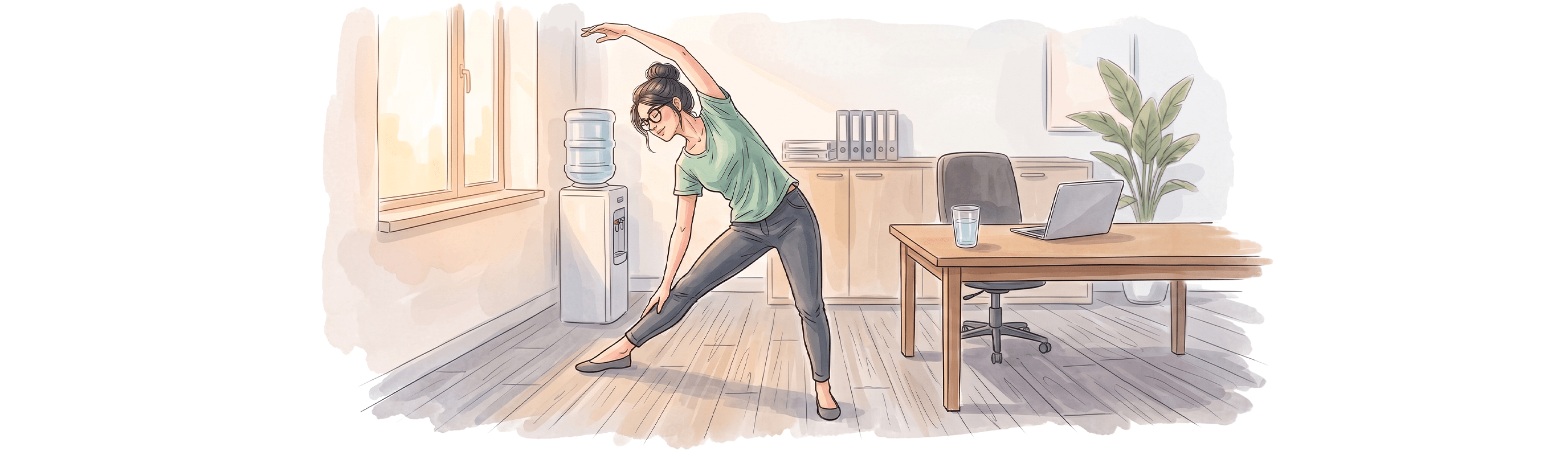
How to break up the afternoon crash with movement
The afternoon energy dip isn't a sign of weakness. It's a natural rhythm further compounded by a heavy lunch and several hours without moving. Instead of putting it out with another coffee, break it up with your body. Here's the plan I offer to the teams I work with.
Stand up every hour for three to five minutes. It's not about performance. Walk to the window, take the stairs, get some water. What matters is that you break the stillness, not how tired you get. Swap the coffee ritual for a movement ritual. When you catch yourself heading for a third mug, go for a short walk around the office instead, or do a series of gentle shoulder and hip relaxes. It's the same gesture, the same break from the screen, but with a different impact on your evening sleep.
Save coffee for the morning. Since afternoon caffeine burdens sleep, move it to the first half of the day. After lunch, look for energy in movement, light, and water, not in the coffee machine.
Make it a team rhythm, not a solitary struggle. It's easy for one person to forget. For an entire team sharing a prompt for an active break, it's much harder to forget. That's the difference between good intention and a habit.
A founder's observation at the end of this section. In companies that introduce regular active breaks, what I hear most often is not "I have more energy," but "I have a more balanced day." And that's the core of it. Coffee brings peaks and valleys. Movement smooths out the curve.

What does the company get out of it
I'm writing this as a founder selling a product to companies, so I won't sugarcoat it. The afternoon slump of an entire team isn't a trivial HR issue. It means slower decisions, more errors, and a worse mood for several hours every day. Multiply those hours by the number of people and days in a year, and you'll see a cost that isn't written down anywhere, but genuinely evaporates value. The good news: the remedy is free. A few minutes of movement instead of another cup of coffee costs nothing beyond the decision to get up. A tool like FIXme helps weave these breaks into the day's rhythm so they happen automatically, but you can take the first step today at 3 p.m.

FAQ
- Should I give up coffee completely?
No. Moderate coffee in the morning is fine and has its perks. The point is not to use it to rescue the afternoon crash, because then it harms your sleep. After lunch, look for energy in movement.
- How much movement is enough to feel a difference?
The microbreak meta-analysis indicates that even short breaks from a task, up to 10 minutes, increase vigor and lower fatigue. A few minutes every hour makes a real difference in how you feel.
- Why doesn't movement cause a crash like coffee does?
Because it doesn't temporarily block fatigue signals; it genuinely increases alertness and improves circulation. There is no rebound effect like when caffeine wears off.
- When should I have my last coffee so it doesn't ruin my sleep?
According to a study from the journal *Sleep*, a standard mug is best consumed no later than nearly nine hours before bedtime. If you go to bed at 11 p.m., coffee after 2 p.m. starts chipping away at your night.
Want active breaks to happen naturally, not just in theory? At FIXme, a virtual physical therapist reminds you about the break and guides you through it step by step. See what it looks like: FIXme - Try 14 days for free
Learn more
Discover more from the latest posts.