Published: Sep 21, 2026
Micro-breaks instead of coffee: how to swap the coffee machine ritual for a few minutes of movement
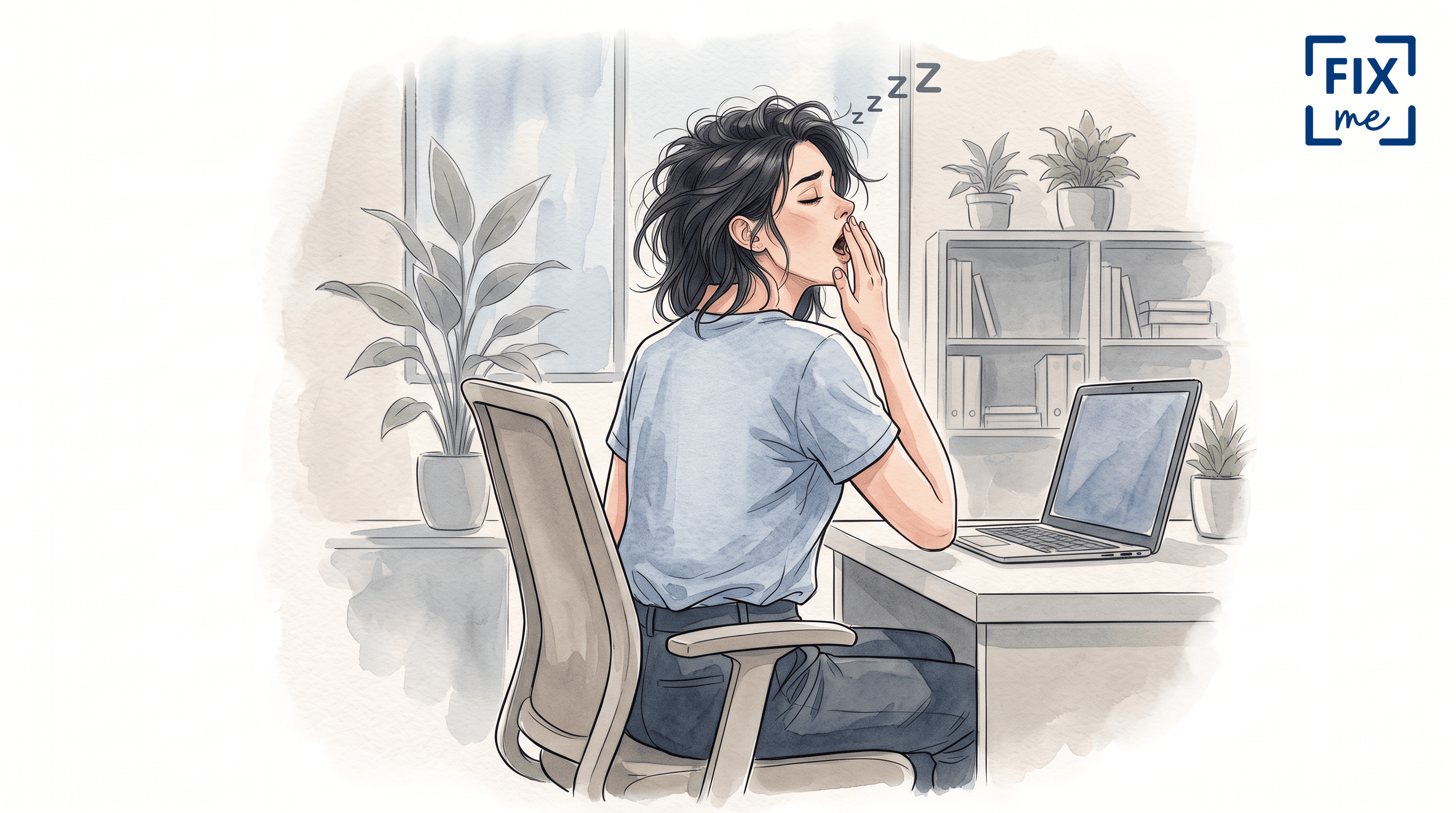
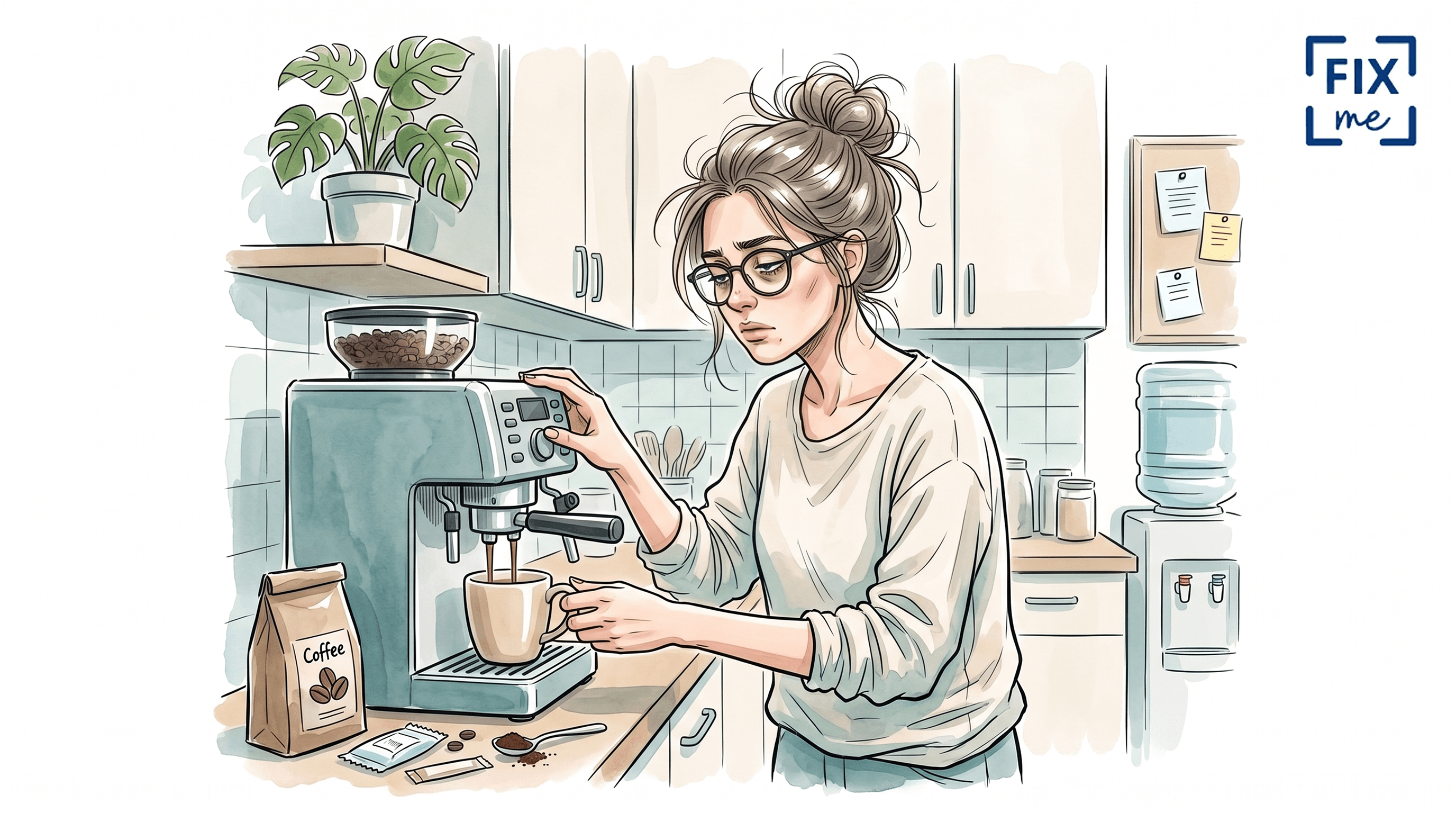
As a specialist, I help brands with ergonomics, among other things. I see the same reflex in almost every office: 3 PM, a slight slump in energy, the hand automatically reaching for the coffee machine. The "coffee vs. movement" philosophy already has its longer lecture, so here I'm doing something narrower and more practical. I present micro-breaks instead of coffee as a specific ritual that steps right into the spot where you'd normally go for a third cup. Not "less caffeine in theory", but: what exactly to do, how long it takes, how often, and how to make it stick.

Tomasz Świderski · 5 min read
What exactly is a micro-break and how long does it last
Let's start with a definition, because this isn't an empty buzzword. In the 2022 meta-analysis by Albulescu and colleagues in *PLOS ONE*, a micro-break is "a short discontinuity in a task lasting no longer than 10 minutes". That's it. The upper limit is ten minutes, the lower is several dozen seconds. In office practice, aim for three to five minutes, as that's what you can realistically carve out between meetings without disrupting the flow of work.
This is an important difference compared to the classic "coffee break". Coffee is a ritual that takes four minutes of your time and simultaneously pumps something into your body that will come back to haunt you in the evening. A micro-break takes the same four minutes, but leaves you with a clean slate. The same gesture, a different bill.
Why micro-breaks instead of coffee, and not another cup
I break down the mechanism in detail in the pillar article, so here I'll keep it to two sentences. Coffee doesn't give you energy, it only borrows it: it blocks the fatigue signal, which then returns compounded, and its half-life is around five hours (StatPearls, 2024), so a 3 PM cup is still working at 8 PM. For the full lecture on adenosine and the afternoon crash, I refer you to the article "Movement instead of coffee".
A micro-break works the opposite way and leaves no debt behind. The aforementioned meta-analysis included 22 study samples and 2,335 individuals. Conclusion: short disengagements from a task significantly increased vigor (d = 0.36) and decreased fatigue (d = 0.35), in both cases at p < 0.001. That's the first reason why I bet on it instead of the coffee machine.

What a good micro-break looks like: move, don't scroll
Here's the catch that trips most people up. A micro-break isn't five minutes on your phone. You get up from one screen only to sit down in front of another, and you come back just as tired, only with the added false impression that you "rested". That's not a reset. That's just switching screens.
A good micro-break is active and takes your eyes off the monitor. Stand up, walk to the window or get some water, relax your shoulders and hips, go down a flight of stairs and back up. If you can step outside the building, even better, because you then combine movement with daylight and fresh air. Movement itself has an edge even over just standing up: in a 2022 meta-analysis by Buffey and colleagues in *Sports Medicine*, light walking proved to be a "superior form of active break" compared to just standing at a desk. A few steps beat standing upright.
The second reason why it's worth actually moving rather than just changing position is the nature of the break itself. In the same meta-analysis, the authors noted that the longer the micro-break, the greater its impact on performance. So it's not about jumping up for thirty seconds and rushing back. Give yourself a full three to five minutes without a screen.

How often: anchor the micro-break to the afternoon slump
The post-lunch dip in energy isn't your weakness, it's your circadian rhythm. A 2021 study by Lin and colleagues describes the "post-lunch dip", a drop in alertness between 2 PM and 4 PM. This is exactly the window when you reach for a second or third coffee, and exactly the window where a micro-break works best.
A simple rhythm I suggest to teams: get up every hour for three to five minutes, and in the 2 PM to 4 PM window, treat it as a fixed point, not an option. I'm not counting on any magic number of repetitions here, I'm counting on consistency. A 2025 diary study by Albulescu and colleagues showed that people who take micro-breaks "feel better at the end of the workday", and the effect is more pronounced on higher-workload days. Which is precisely when the coffee machine tempts you most.
How to swap the habit: the coffee cue becomes a movement cue
The hardest part isn't "what", but "how to maintain it". The coffee-drinking habit has its trigger: a specific time of day, boredom, an energy drop, a colleague standing up from their desk. The trick is to attach that same trigger to a different action. Catch yourself heading for a third cup? That's your cue for a micro-break. You're not fighting the habit; you're redirecting it.
In my experience, one thing makes the biggest difference here: the team's rhythm, not a solo struggle. It's easy for one person to forget and head back to the coffee machine. For an entire team that shares a cue for an active break, it's much harder to lapse. That's the difference between good intentions and a habit that sticks.

And my personal observation to wrap up: in summer, this swap makes even more sense. A hot mug on a sweltering afternoon is the last thing your body wants, and afternoon caffeine chips away at sleep that is already worse in the heat anyway. A micro-break, preferably a step closer to shade and a window, is the summer version of that same ritual.

FAQ
- How long does a micro-break last?
By definition, no longer than 10 minutes (Albulescu et al., *PLOS ONE*, 2022). In the office, aim for three to five minutes, as that's what you can realistically carve out between tasks, and it's enough to take your eyes off the screen and get moving.
- How to take micro-breaks at work so they actually work?
Move, don't scroll. Get up from your desk, take a walk, relax your shoulders, ideally step closer to a window. Just switching screens to your phone isn't a break. What counts is looking away and taking a few steps.
- Can a micro-break really replace coffee?
For the afternoon slump, it's a better tool than a third cup. Micro-breaks significantly increase vigor and decrease fatigue without leaving an evening sleep debt. You can safely keep your morning coffee.
- How often should you take a break instead of coffee?
A good rhythm is a few minutes every hour, and in the 2 PM to 4 PM window, treat it as a fixed point in your day. That's when the natural dip in alertness occurs.
Want micro-breaks to happen on their own, not just in theory? In the FIXme app, a virtual physical therapist reminds you of breaks and guides you through them step by step. See what it looks like: - sign up