Published: Oct 31, 2026
Clenching teeth from stress: what bruxism has to do with headaches and neck pain
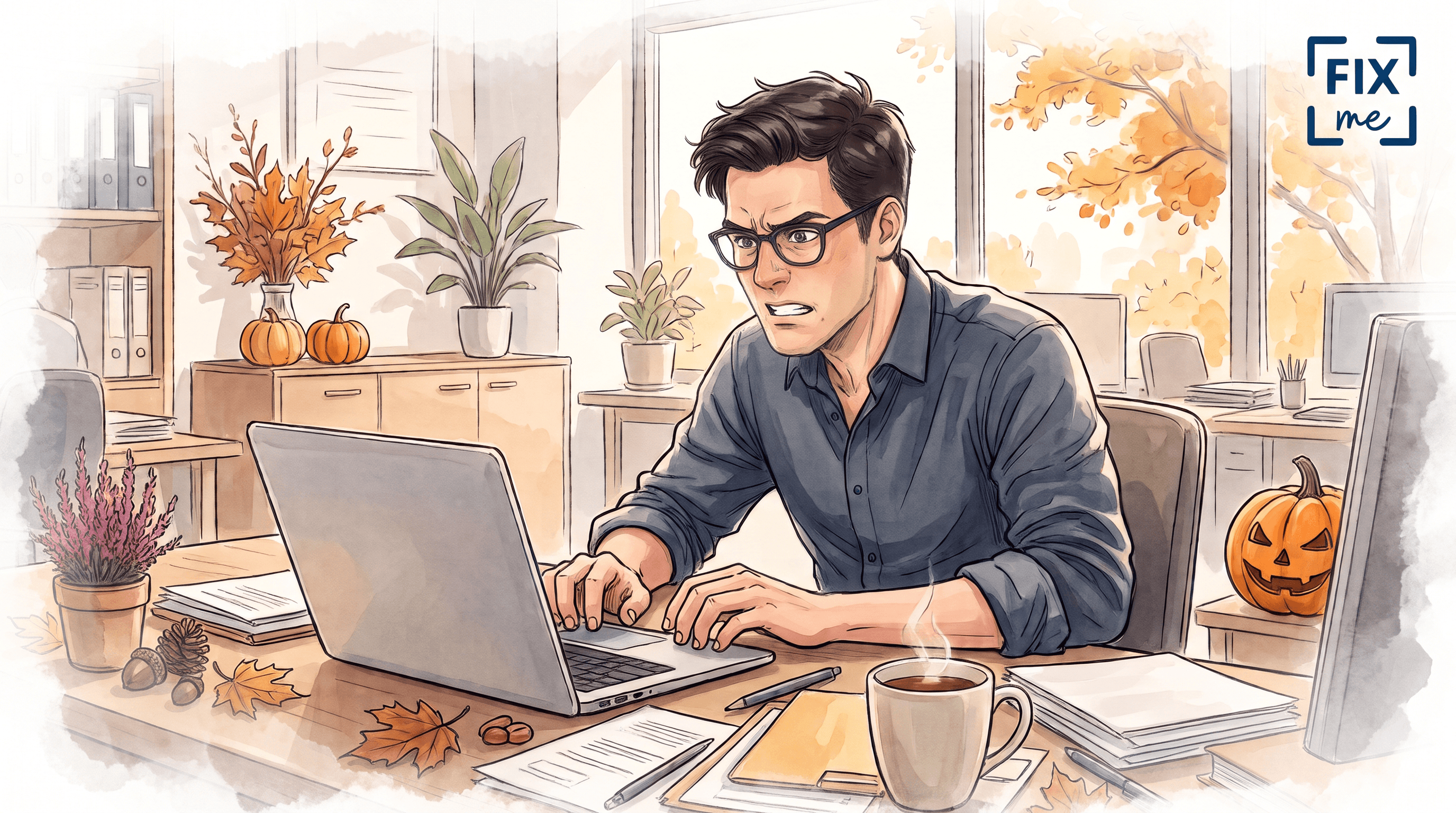
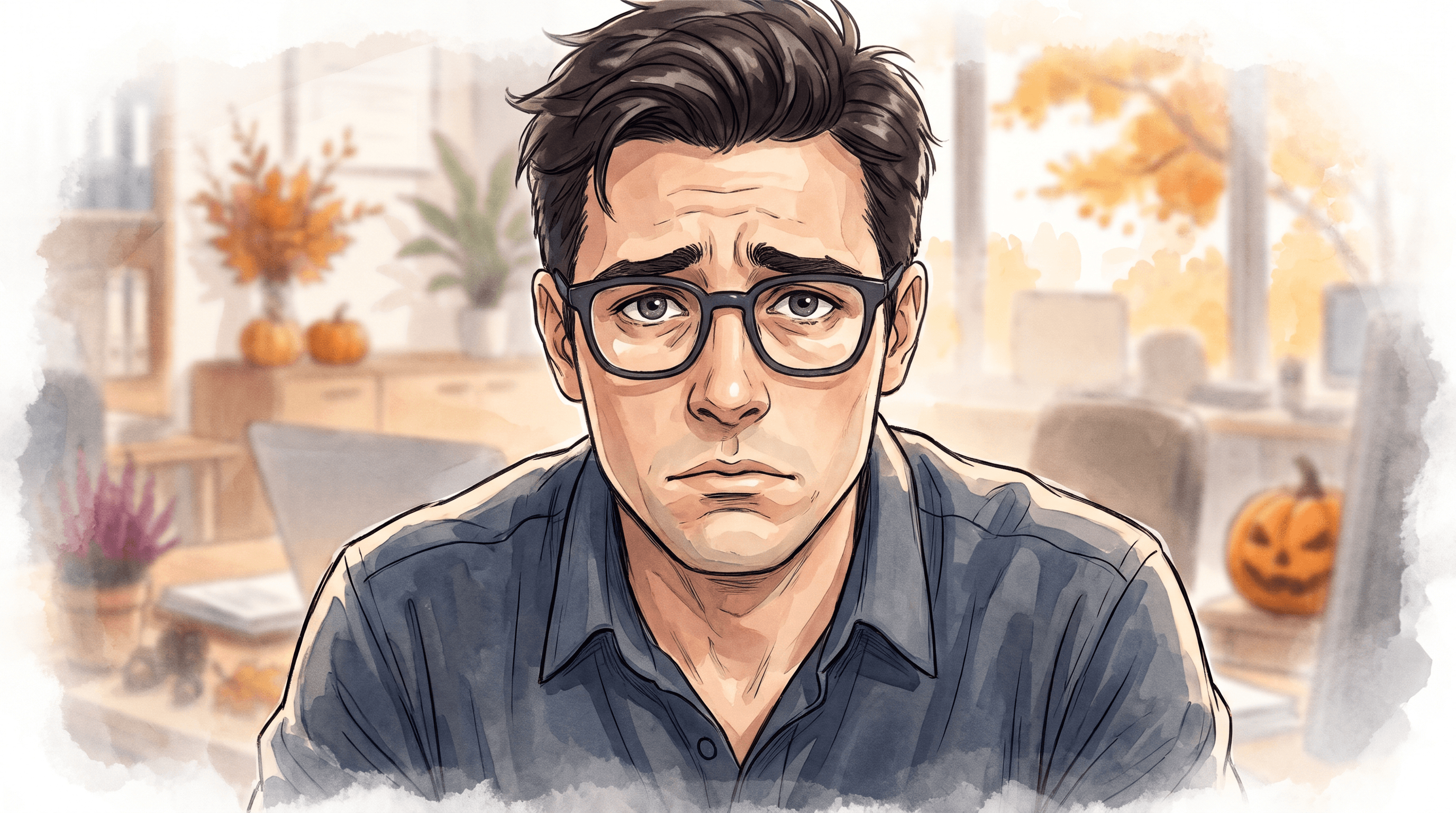
Deadlines are looming, your inbox is swelling, and halfway through an email you realize your teeth are clenched like a vise. Clenching your teeth from stress isn't just your issue: awake bruxism is reported by roughly one in four people. If, on top of that, you feel a heavy head and a stiff neck at the end of the day, let's look at what is genuinely connected and what is just an assumption.

Małgorzata Świderska · 7 min read
Awake bruxism: a habit that often goes unnoticed
Bruxism is repetitive jaw muscle activity: clenching, grinding, or bracing the jaw without tooth contact. It can occur at night or during the day. The daytime type, or awake bruxism, is reported by about one in four people in the general population according to a 2026 systematic review (Graham et al., BMC Oral Health).
It's surprising how little we notice it. The authors of the same review write that people usually visit the dentist because of the consequences, often without even realizing they clench their teeth during the day. In my practice, this is a frequent "aha" moment: someone comes in with neck trouble, and during the conversation catches themselves clenching their jaw.
Clenching teeth from stress: what the research says
The link with stress comes up in many studies, although these are observational studies. A 2025 systematic review (Belenda González et al., Journal of Dentistry) included 10 such studies in adults and pointed to an association of bruxism and temporomandibular joint disorders with psychological factors: stress, anxiety, and depressive symptoms.
This was well demonstrated by a study from Israel (Emodi-Perlman et al., Journal of Oral Rehabilitation, 2025). For 7 days, dental students from Tel Aviv received 20 phone notifications a day at random times and noted what their jaw was doing each time. A group during peacetime (106 people) was compared with a group examined during wartime (82 people). During wartime, relaxed jaw muscles were reported less frequently. In the wartime group, a relaxed jaw was noted more often by people who bounce back more easily from stressful events.
A lot of videos featuring "masseter massage" and the slogan "dental physiotherapy" are circulating on social media today. It's good that the topic has moved beyond clinic walls. However, it's worth knowing where the evidence stands before believing that one trick will solve the problem.
Jaw, head, and neck: correlation is not causation
A 2021 review (Réus et al., Journal of Oral & Facial Pain and Headache) compiled observational studies on bruxism and primary headaches. In three studies on tension-type headache, an association emerged only with awake bruxism, with an odds ratio of 5.23. Sleep bruxism was not associated with tension-type headache. The authors assessed the certainty of this evidence as low to very low.
A review in the journal Pain (Voß et al., 2024) adds an important point: bruxism itself is not painful, but especially alongside temporomandibular joint disorders, it can aggravate a pre-existing headache. The authors also note that psychosocial factors, such as stress, can cloud this picture.
A genetic study using Mendelian randomization paints a different picture (Du et al., Journal of Oral & Facial Pain and Headache, 2025). It found no significant association between bruxism and any of the six types of headache and neck pain studied, although the study did not distinguish between daytime and nighttime bruxism. However, a bidirectional association emerged between temporomandibular joint disorders and neck and shoulder pain. A 2025 meta-analysis paints a similar picture (Bizzarri et al., Journal of Clinical Medicine): people with neck pain also more frequently had jaw complaints, albeit with very low certainty of evidence.
An honest conclusion is therefore this: jaw complaints, a tense head, and a stiff neck often go hand in hand, but it is unclear what causes what. Stress may be behind all three at once.
And what about the cold? I often hear the question of whether we clench our teeth more in the fall. I haven't found any studies to confirm this.
What you can do during the day
The review by Graham et al. included 9 studies with 165 participants. Reminders, habit reversal techniques, biofeedback, and self-care counseling mostly yielded beneficial results. The evidence is limited and certainty is low, as these are isolated, small studies. In one of them, daily email reminders reduced awake bruxism behaviors more than one-time advice.
For jaw complaints, an umbrella review (Bijelic et al., Journal of Oral Rehabilitation, 2026) generally points to the benefits of education, behavioral approaches, and jaw exercises. On the other hand, a meta-analysis of 47 randomized controlled trials (Ferland et al., Journal of Oral Rehabilitation, 2026) rated the certainty of evidence for education and self-care as very low to low. It is a good start, not a miracle method.
1. Check your jaw when reminded
Set a few reminders throughout the day or stick a note on your monitor. When it pops up, ask yourself: are my teeth touching? If so, part them slightly and let your jaw drop. In research on awake bruxism, a relaxed jaw is described just like that: muscles loose, teeth not touching. The review authors suggest performing a few relaxation movements after the reminder.
2. Masseter self-massage
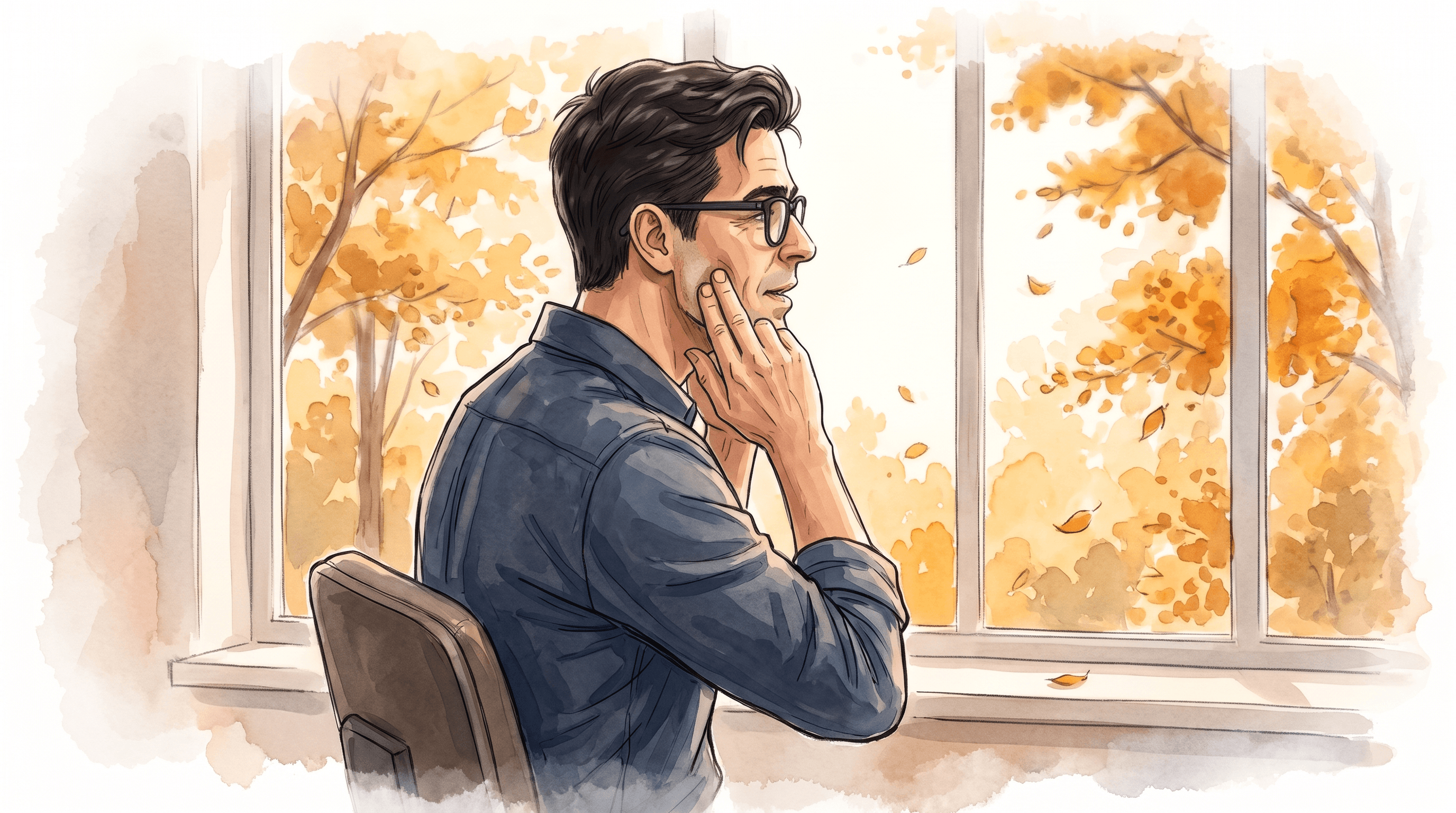
Place your fingertips on your mandible and massage along the jaw in circular motions. The masseter is easy to find: clench your teeth for a moment, and it will harden under your fingers, then part them again. Next, glide your fingers from the corners of your mouth toward your ears, along the lower part of your face. Keep the pressure gentle and pain-free.
3. Lateral neck bends
Sit up straight. Lower your head toward your shoulder, hold for at least 3 seconds, and return. Alternate sides, 8 repetitions in total. Keep your shoulder blades pulled down; only your neck works.
4. Neck flexion and extension
From a neutral position, bring your chin toward your breastbone, hold for at least 3 seconds, then tilt your head back and hold again. Seven repetitions, keeping your shoulders level the whole time.
When to hold off and consult a specialist
Stop the exercises and consult a healthcare professional if you experience chest tightness or discomfort, dizziness, spots before your eyes, sudden shortness of breath, heart palpitations, or sharp pain during movement. The same applies to numbness or tingling in the arm that does not subside after changing positions. Also refrain in case of fever or infection, after an injury, or following a procedure without approval from your treating specialist.
Additional caution applies to self-massage. Experts in an international consensus on foam rolling (Bartsch et al., Journal of Clinical Medicine, 2021) identified open wounds and fractures as contraindications, and local inflammation as a reason for special caution. The consensus focused on foam rolling, not facial massage, but the same principles are worth adopting. Therefore, do not massage an area with a wound, fresh injury, or inflammation. If your jaw hurts when opening your mouth, locks, or if the discomfort does not subside, talk to a dentist. Occlusal splints and other methods are tailored by a specialist.

FAQ
- Can stress cause teeth clenching?
Observational studies link bruxism with stress, anxiety, and low mood. A 2025 review of 10 studies pointed to such an association, but it does not prove that stress is the sole cause.
- Can teeth clenching cause headaches?
Awake bruxism is associated with tension-type headaches, but only in observational studies and with low certainty of evidence. A 2025 genetic study did not confirm a causal link, although it did not distinguish between daytime and nighttime bruxism.
- How to stop clenching teeth during the day?
The behavioral approach is best documented: building habit awareness and setting reminders throughout the day. The evidence is still limited, and if discomfort persists, it's worth consulting a dentist.
- Does masseter massage help with bruxism?
Massaging the jaw muscles was one component of a self-care package in a small study, alongside relaxation and exercises. There is no evidence that self-massage alone cures bruxism; treat it as part of a break, not a cure.
Your jaw clenches when you're thinking about something else entirely. In the FIXme app, breaks remind you automatically, a virtual physiotherapist guides you through neck movements, and guided self-massages (neck or jaw) show you step-by-step what to do with your hands. See how it works: sign up
Learn more
Discover more from the latest posts.